What Water Damage Restoration Costs in Queen Creek, AZ
If you are looking up the cost of water damage restoration in Queen Creek, AZ, you want a number you can plan around before anyone opens a wall in your home. This guide gives you the honest version: planning ranges for the common jobs across Queen Creek, Gilbert, Chandler and Mesa, drawn from published national and regional cost data and the shape of East Valley housing. They are not our price list and they are not a quote for your home, because the real figure lives in your moisture map, which nobody can see from a phone call. What these ranges will do is orient you: when a contractor gives you a number, you will know whether it sits inside the normal band for the work described, and you will know which questions move a price.
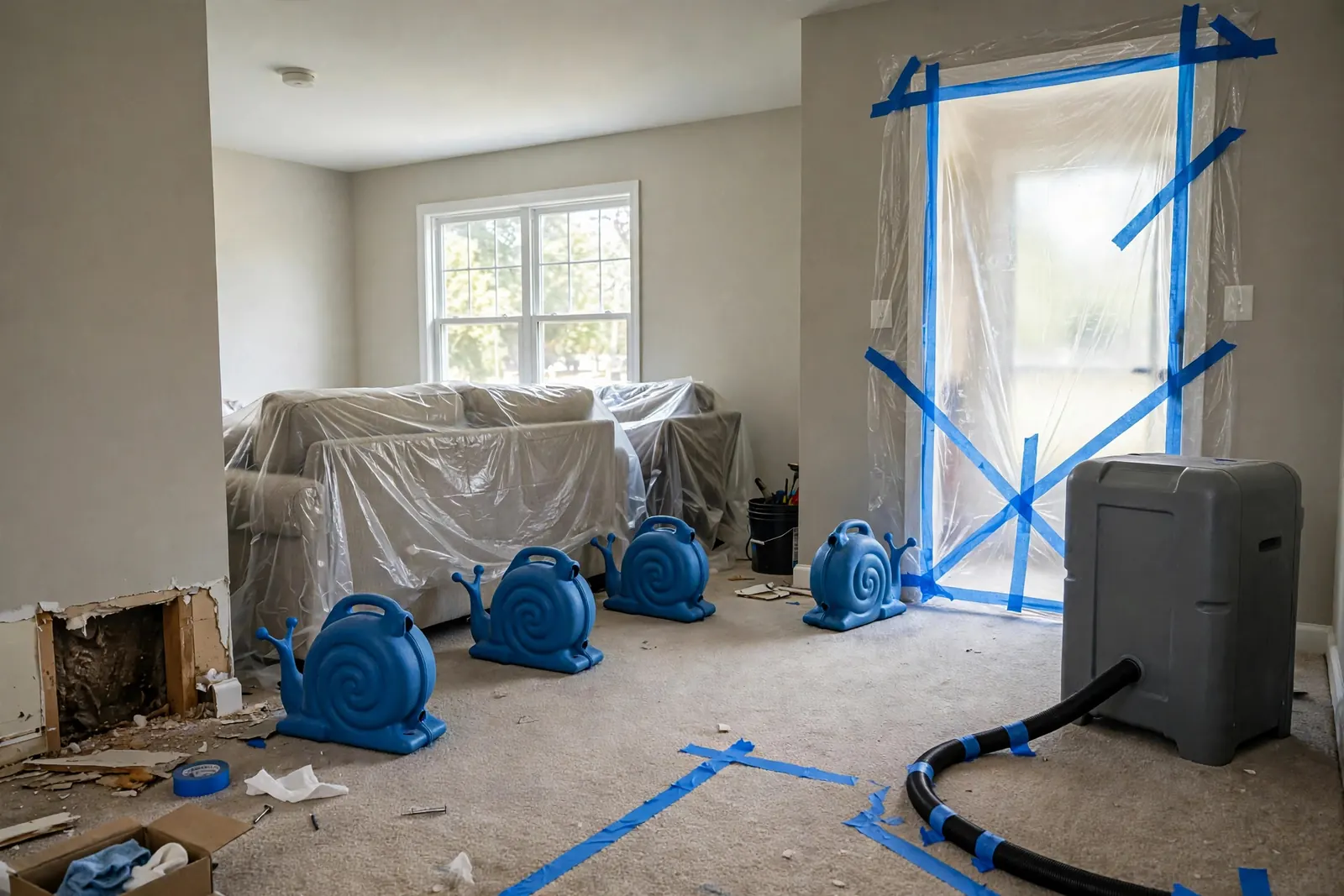
The short version: small clean-water jobs, one room, caught fast, commonly run $1,200 to $3,000 all-in for extraction and drying. A typical multi-room loss with some demolition and repair commonly runs $3,000 to $8,000. Sewage, fire, long-hidden leaks and multi-room mold push beyond that, sometimes well beyond. The sections below break the total into its parts.
How to read these numbers
Restoration pricing has three drivers, and every range below assumes them. The category of water: clean supply water is the cheapest to handle; gray water costs more; sewage (Category 3) requires removal of porous materials and disinfection, and costs the most per square foot. The area affected: most extraction and drying work scales with square footage and the number of wet assemblies (floors, walls, ceilings, cabinets). Time: a leak caught in an hour and a leak caught in a month are different jobs even at the same address, because time converts drying into demolition and demolition into rebuild. All ranges assume a typical East Valley single-family home with standard access. Two-story work, high-end finishes and difficult access move numbers toward the top of a range or past it.
Extraction and structural drying
- Water extraction: commonly $3 to $7 per square foot of affected area, depending on depth and category of water.
- Structural drying (equipment and monitoring): commonly $1,000 to $3,500 for a typical residential loss over three to five days, scaled by the number of rooms and the equipment the materials require.
- Selective demolition to dry cavities: commonly $300 to $1,500, depending on how much baseboard, drywall or flooring must open to dry what is behind it.
The most common homeowner surprise is that drying and repair are separate numbers. Drying returns a structure to a safe moisture standard. Repair returns it to finished, and repair is priced from the demolition list.
Repair after drying
- Drywall patch and paint: commonly $250 to $900 per affected wall section.
- Baseboard replacement: commonly $3 to $8 per linear foot installed and painted.
- Flooring: luxury vinyl and laminate replacement commonly $4 to $9 per square foot installed; tile and real wood run higher and are sometimes repairable instead, which is a judgment the assessment makes with readings, not optimism.
Mold remediation costs
Mold is priced by the size of the contained work area and the amount of porous material removed, not by the size of the visible patch. A contained single-area job, a bathroom wall section with its source fixed, commonly runs $1,500 to $3,500. A room-scale job with containment, drywall removal and framing treatment commonly runs $3,500 to $7,000. Multi-room growth after a long-running leak, with rebuild, runs $7,000 to $15,000 and beyond. The full reasoning is on our mold remediation page. Be wary of two quotes in this category: the suspiciously cheap one, which is usually a spray treatment with no containment and no source repair, and any quote given from a photograph, which is priced on the part of the colony that shows.
Fire, smoke and sewage costs
- Fire and smoke restoration: a contained kitchen fire with soot through the main floor commonly runs $3,000 to $15,000 for securing, cleaning and odor work, before structural rebuild. Multi-room and structural fires run far higher and are scoped individually after assessment. Sequence and methods are on our fire damage restoration page.
- Sewage cleanup: a single-bathroom backup with extraction, removal and sanitation commonly runs $1,500 to $4,000. Multi-room Category 3 events run $5,000 to $10,000 and beyond with rebuild. What drives it is how much porous material must come out, which is a health standard, not a pricing choice; see our sewage cleanup page for why.
The cost of water damage restoration in Gilbert, and why it varies
Gilbert deserves its own note, because the cost of water damage restoration in Gilbert runs above the East Valley average for structural reasons, not contractor ones. Gilbert homes are larger on average, so the same failure, one supply line, wets more square footage. Finishes run higher: more custom tile, more built-ins, more cabinetry in the water's path, and cabinet and finish work is where repair totals are made. Lake-community and golf-course homes in places like Val Vista Lakes add access and protection requirements during the work. And Gilbert's defining loss, the slab leak in a twenty-year-old master-planned home, carries a hidden line item: by the time it is found, the moisture footprint is weeks wide, so drying and often mold work are larger than the visible damage suggests. Gilbert homeowners comparing quotes should compare the moisture maps, not the totals: the cheapest quote on a slab leak is usually the one that metered the least.
Three worked examples
Abstract ranges orient people; worked examples settle them. These are composites of typical East Valley jobs, shown with their reasoning, not records of specific clients.
Example 1: water heater failure, Queen Creek two-story, caught within the hour. Clean water, garage and one adjoining room, roughly 220 square feet affected, no wall cavities beyond one shared wall. Extraction, four days of drying with daily checks, one wall section opened and repaired, baseboards replaced: commonly lands at $2,400 to $3,800.
Example 2: slab leak, Gilbert, running about three weeks before the flooring showed it. Two rooms of flooring up to dry the slab, moisture into three wall bases, early mold at two baseboard runs requiring contained remediation, then flooring and drywall repair: commonly lands at $6,500 to $11,000, with the mold and flooring lines, not the water work, making most of the total.
Example 3: toilet supply failure upstairs, Chandler, discovered on return from a trip. Water through a ceiling into the kitchen below, two assemblies wet, cabinets involved: extraction, five days of two-level drying, ceiling drywall replaced, cabinet toe-kicks rebuilt: commonly lands at $5,000 to $9,000. The trip is the expensive part of this example; the same failure discovered the same morning commonly costs half.
What moves a price up or down
Down: fast discovery, clean water, hard-surface floors, a structure that dries closed without demolition. Up: sewage or fire involvement, water in wall cavities and under floating floors, custom finishes in the affected area, second-story sources (two assemblies to dry, ceiling and floor), and any job where the source ran long enough to add mold remediation to water restoration. The other upward driver is documentation quality: a properly documented job costs what it costs, and it is also the version your insurer can actually evaluate. An undocumented cheap job that gets its claim denied is the most expensive version of all. Our insurance claims guide explains that trade honestly.
Frequently Asked Questions
Can you give me an exact price over the phone?
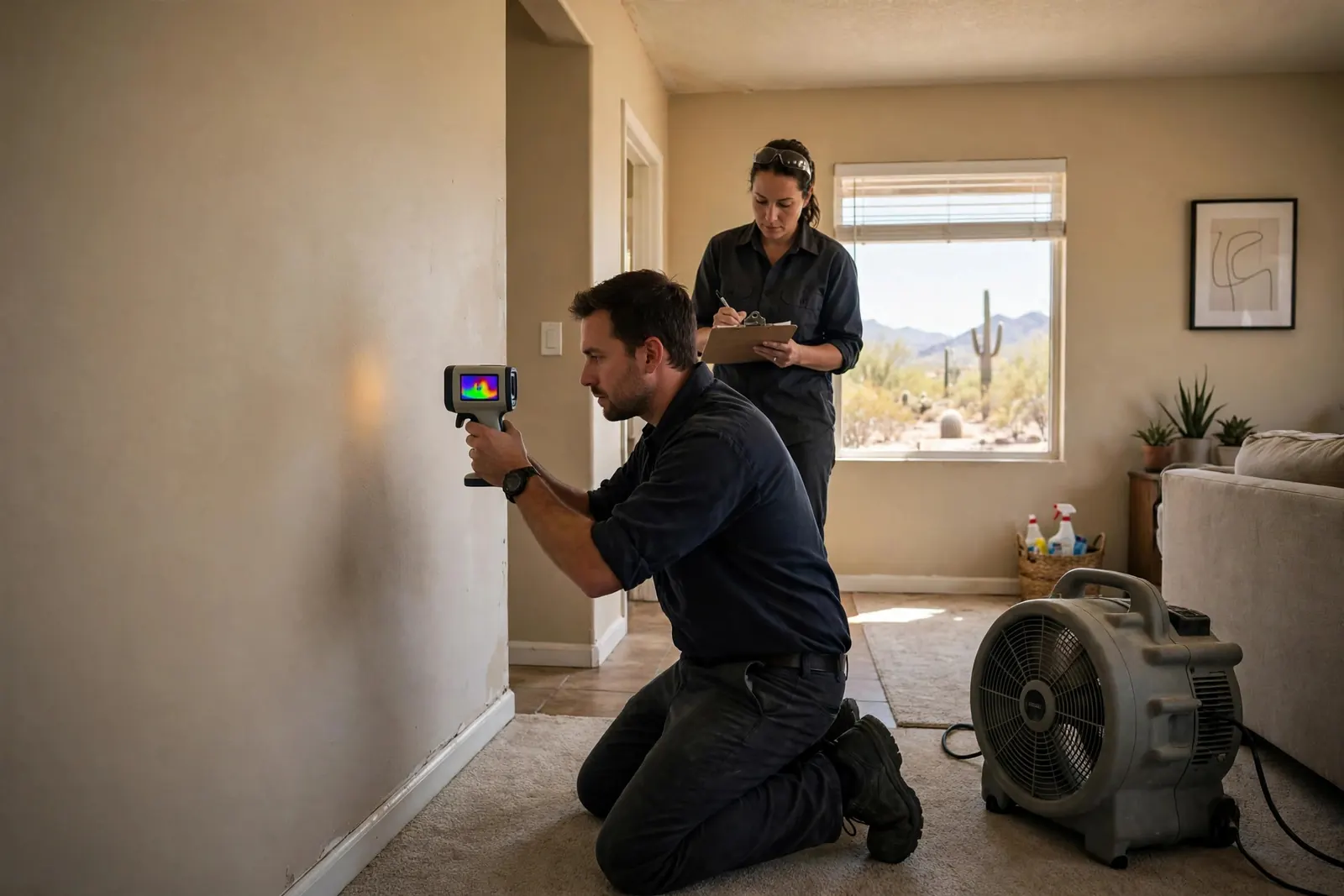
No, and you should not trust one. The price lives in the moisture map: how far water traveled inside walls and under floors, which only an in-person metered assessment can establish. We publish ranges here so you can judge real quotes, and our own quotes arrive in writing after the assessment, itemized against the readings.
Does insurance pay these costs?
For sudden events, commonly yes, subject to your deductible and policy limits; for gradual leaks, commonly no. Mold and sewer backup often sit under separate limits or endorsements. The insurance guide walks through how Arizona claims actually sort out, including why documentation decides more claims than damage does.
Is it cheaper to dry it myself with rented fans?
For a small, clean, fresh spill on hard flooring, yes, and our homepage triage tool says so plainly. For water in walls, carpet pad or cabinets, rented fans cannot dehumidify a cavity or verify dryness, and the saving usually converts into a mold remediation bill. The line is the material, not the effort.
Why do two companies quote the same job so differently?
Usually scope, not price. One metered and found the wall wet; the other looked at the stain. One includes demolition and rebuild; the other ends at drying. Ask each company for the moisture readings and the written scope, and the cheaper quote usually explains itself.
What does the assessment itself involve?
A visit, moisture metering of the affected area and the assemblies around it, photographs, and a written scope with the range for your specific job. Call (480) 555-0100 and we will explain exactly what it includes and what it costs before scheduling anything.
Not Sure What Yours Will Cost?
Tell us what happened and we will call you back to schedule the assessment. Prefer to talk? Call (480) 555-0100.
FIELD FORM · QC-01