Water Damage Questions, Answered Straight
These are the questions East Valley homeowners actually ask us after a leak, a burst line or a monsoon, answered the way we answer them in a wet kitchen: plainly, with the reasoning shown. The services page describes each service in full. Page-specific questions live on their own pages: Mesa, Gilbert and Chandler mold questions are on the mold remediation page, cost questions in the cost guide, and claim mechanics in the insurance guide. What is here is the cross-cutting set. If your question is not here, call (480) 555-0100 and ask it live.
Frequently Asked Questions
How long does water damage restoration take from start to finish?
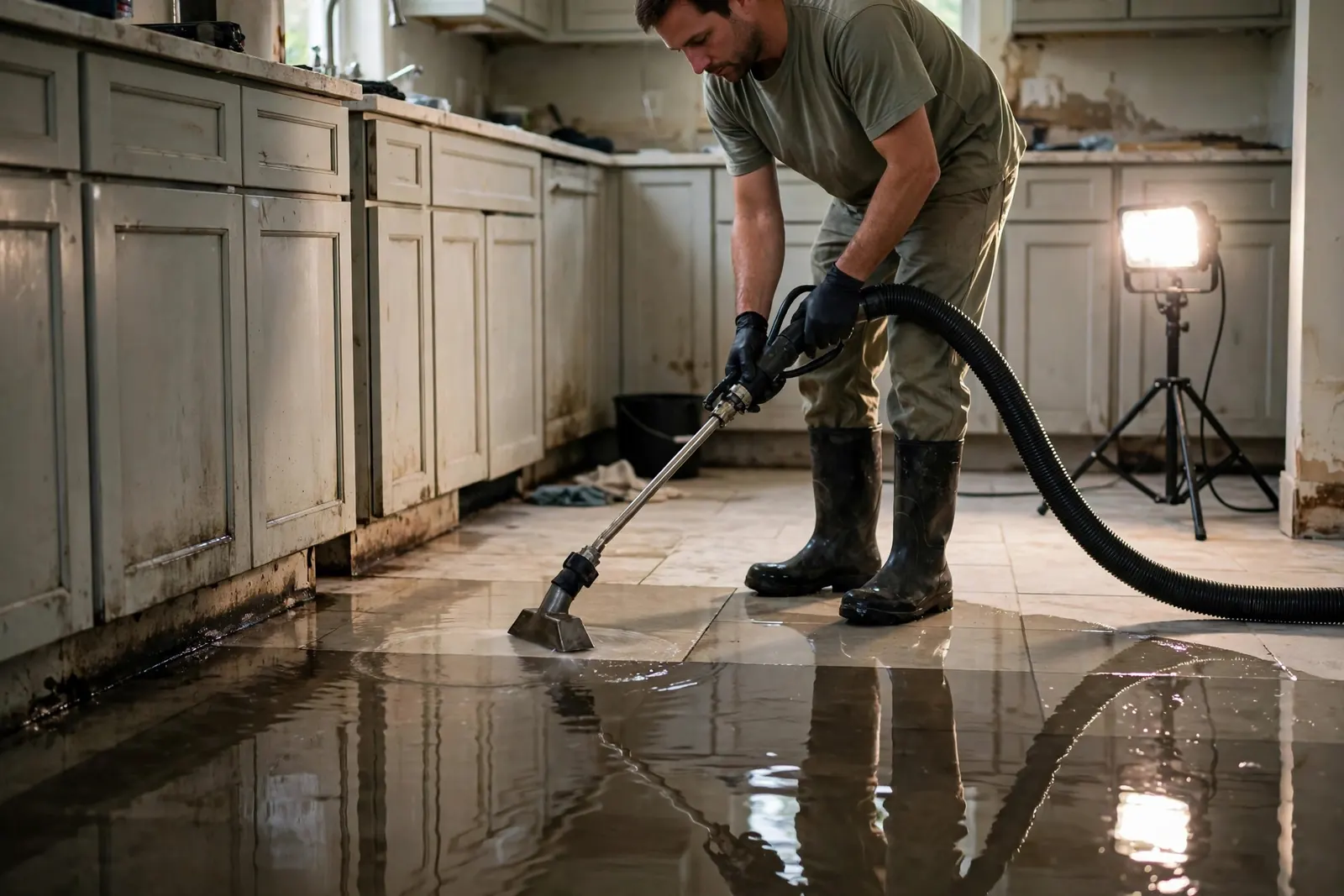
The drying phase of a typical residential loss runs three to five days of monitored equipment, checked daily with moisture meters. Extraction and any needed demolition happen at the front of that window. Repair runs after the structure passes its dry standard and is scheduled from the written scope: days for drywall and baseboards, longer where flooring or cabinetry is replaced. A whole loss, dried and repaired, commonly spans one to three weeks depending on scope, and your written scope will show the sequence for your home before work begins.
How fast does mold start after water gets into a home?
Mold spores are present in every home; moisture is the trigger. On wet drywall, carpet pad and other porous materials, colonization commonly begins within 24 to 48 hours. That single fact drives our scheduling: extraction and drying inside that window usually prevent a mold problem entirely, while water left for a week in warm wall cavities makes one likely. If your loss is already older than that window, an assessment should include a mold inspection of the wet assemblies, which our mold page covers in detail.
Can I stay in my home while drying equipment runs?
For clean-water losses, usually yes. The equipment is loud, the affected rooms are off limits, and the home will feel warmer and drier than usual, but most families stay. Sewage-affected areas and significant mold work are contained and kept empty until cleaned and cleared. We will tell you plainly on site if your situation is one of the exceptions.
What does an assessment involve, and what do I get from it?
A visit to the property, a search for the water source if it is not already stopped, moisture metering of the affected area and the assemblies around it, photographs, and a written scope: what we found, what we propose, and the planning range for your specific job. The findings are yours to keep and compare whether or not you hire us. Call (480) 555-0100 and we will explain exactly what it includes and what it costs before scheduling anything.
My leak is fixed. Do I still need restoration?
Fixing the source stops the water; it does not dry the structure. If water reached drywall, flooring, insulation or cabinets, those materials hold moisture long after the surface feels dry, and that is the moisture mold lives on. The dividing line is what got wet and for how long, which is exactly what a metered assessment answers. Small clean spills on hard surfaces are genuinely a mop-and-fans job, and our homepage triage tool says so. Water inside assemblies is not.
Do you work directly with my insurance company?
We produce the documentation your claim runs on, photos, dated moisture readings, written scope and drying record, and we meet your adjuster at the property to walk the findings. The claim contract itself is between you and your insurer, and homeowners in Arizona may generally choose their own contractor rather than an insurer's preferred vendor. The insurance guide explains ACV, RCV, deductibles and the endorsements that matter here.
Why do you open walls instead of just drying from the surface?
Because wet insulation and the back of drywall do not dry through the face of the wall at any useful rate. Where readings show a cavity is wet, controlled openings let drying air reach the moisture; where readings show a wall is dry, we leave it shut, and we will show you the readings behind either decision. Demolition follows evidence in both directions.
What areas do you serve?
Queen Creek is home ground. We also serve Gilbert, Chandler, Mesa and San Tan Valley with the same crew and process, and the areas page describes each honestly, including where our reach ends and we will tell you a closer crew serves you better.
What happens if I wait a week before dealing with water damage?
The loss changes category. Within the first two days, most clean-water losses are extraction and drying. By a week, wet drywall and pad are commonly colonized, which adds mold remediation to the scope; wood and laminate floors that might have dried flat have cupped; and an insurer reviewing the claim starts asking the gradual-damage question described in our insurance guide. Nothing about waiting makes any part of it cheaper. If life forces a delay, at minimum stop the source, remove standing water, and get air moving over clean-water damage; then call us with the honest timeline and we will scope what the week actually did.
How do I know the home is really dry when you say it is?
By the readings. Drying ends against a moisture standard for each material, wood framing, drywall, concrete, measured with meters and recorded in your job file, not against a schedule or a hand on the wall. If a company cannot show you the numbers behind its dry claim, the claim is an opinion. Ours are in your record, and the same record goes to your insurer when a claim is involved.
Can wet documents, photographs and keepsakes be saved?
Sometimes, and speed decides it. Paper and photographs that are wet but not yet moldy can often be dried and preserved, especially if they are frozen promptly to halt deterioration, a standard archival rescue step. Items that sat wet for days or took sewage water are usually not salvageable, and we will say so plainly rather than bill for heroic efforts on paper. If contents matter to you, flag them at the first call: contents triage in the first hours saves things that cannot be saved on day three.
How do I choose between restoration companies after a big loss?
Ask four questions of every company, including us: How do you decide what is dry, and can I see the readings? What comes out and what stays, and what decides it? Who does the work, your own technicians or a dispatch list? Will the scope and ranges arrive in writing before work starts? The companies that answer cleanly form the short list. Be wary of a full price quoted over the phone without a visit: the price of water damage lives in the moisture map, and nobody can read yours from a call center.
Still Deciding? Talk to the Crew
Tell us what happened and we will call you back to schedule the assessment. Prefer to talk? Call (480) 555-0100.
FIELD FORM · QC-01