Storm Damage Restoration in the East Valley
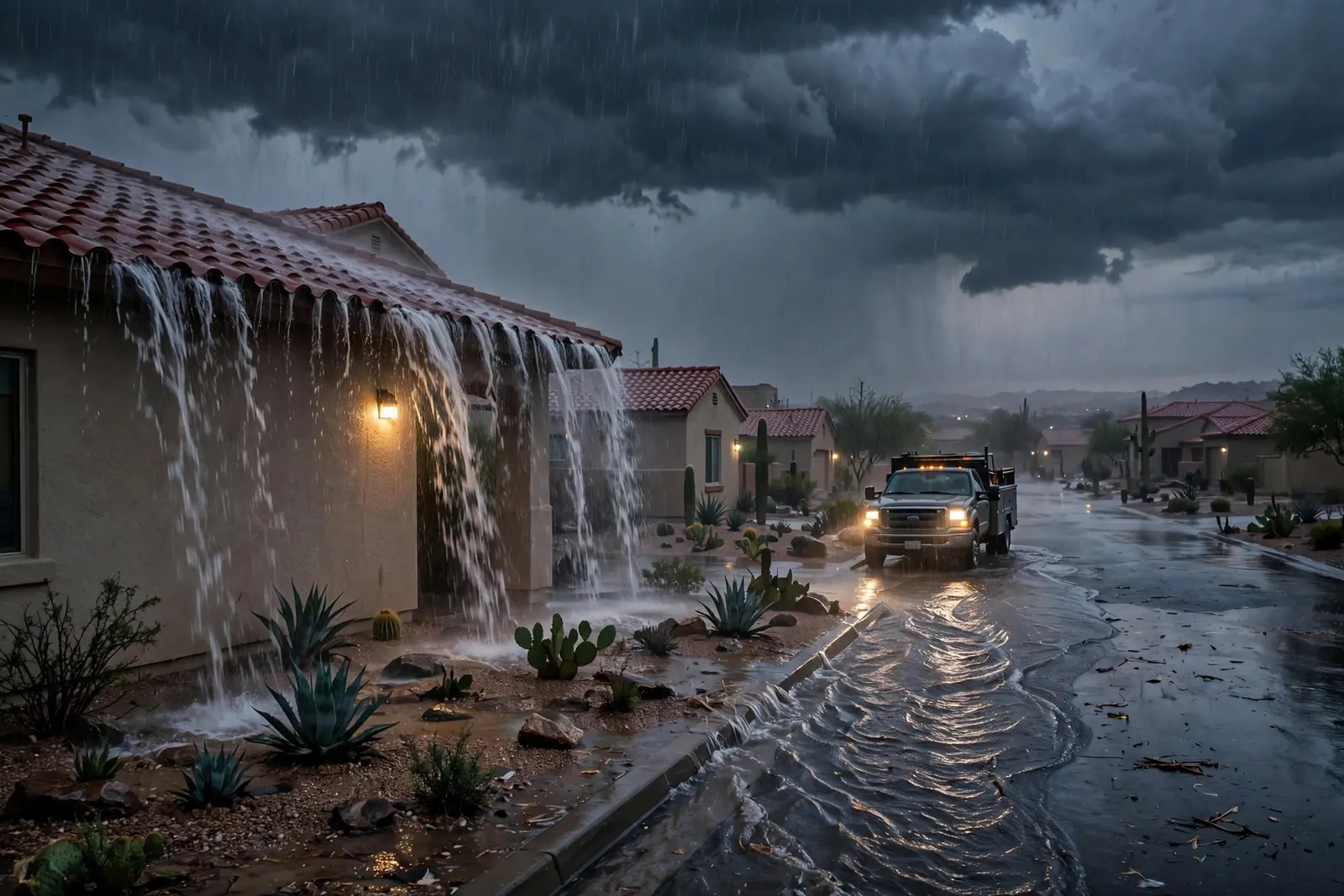
Storm damage restoration in the East Valley follows a season, and the season has a name: monsoon. From July through September, the pattern repeats. A microburst drops an inch of rain in under an hour. Wind drives that rain sideways under roof tiles and through window seals that hold fine against vertical rain. Water sheets off the San Tan Mountains and turns Queen Creek's washes into the fastest-moving water in the county. Then the power flickers, the sump or the AC quits, and by morning a ceiling stain has become a ceiling failure. San Tan Dry Co. restores homes after monsoon storms across Queen Creek, Gilbert, Chandler, Mesa and San Tan Valley.
Serving Mesa · Gilbert · Chandler · Queen Creek · San Tan Valley
In short: after a storm, the order is safety, documentation, extraction, then drying. Photograph everything before you move it, stop water at its source where you safely can, and call (480) 555-0100. Standing water and hidden roof-leak moisture are what turn a storm repair into a mold claim.
How monsoon storms actually damage East Valley homes
Wind-driven rain is the signature failure. Tile roofs common across the East Valley are water-shedding systems, not sealed ones: hard sideways rain gets under tiles at ridges, valleys and penetrations, wets the underlayment, and finds the nail holes and seams that vertical rain never reaches. Foam and flat sections pond until they find a seam. The stain appears in a ceiling days later, and the owner understandably blames the last rain, when the entry happened over several storms.
Flash flooding follows the geography. Runoff from the San Tan Mountains and the Queen Creek wash system moves fast enough to come under doors and through garage seals in low lots, especially in the Ranchettes and the lower pockets of San Tan Valley. Irrigation canals and retention basins in Gilbert and Chandler overflow their banks in the worst cells.
Haboob dust plus water is the overlooked combination. A dust storm loads roof valleys, gutters and HVAC systems with fine silt. The rain that follows turns that silt into a slurry that dams water in exactly the wrong places and carries grit into condensate lines, which then clog and overflow inside the house a week later. Post-monsoon condensate failures are a pattern we count on.
Wind damage peels back patio covers, lifts shingles on the older asphalt stock in Mesa, drops limbs, and turns unsecured yard items into window impacts. Every opening the wind makes is a water entry for the next cell in the line, which during monsoon season is often the same evening.
The first hours after a storm
Safety first: stay clear of downed lines, and do not walk on a roof, ours or yours, wet or dry, as a homeowner. If water is coming through a ceiling, a container under the drip and a small puncture in the lowest bulge of the ceiling paint releases trapped water in a controlled way instead of letting it spread across the whole ceiling. Photograph and video everything before you move or discard anything, because storm claims are documentation contests. Move what can be saved out of wet areas, keep clear of any room where sewage came up through drains (storms cause those too, and our sewage cleanup page explains why that water is a different category), and call us. Extraction and drying started within the first day is the difference between a restoration and a reconstruction.

How our storm restoration runs
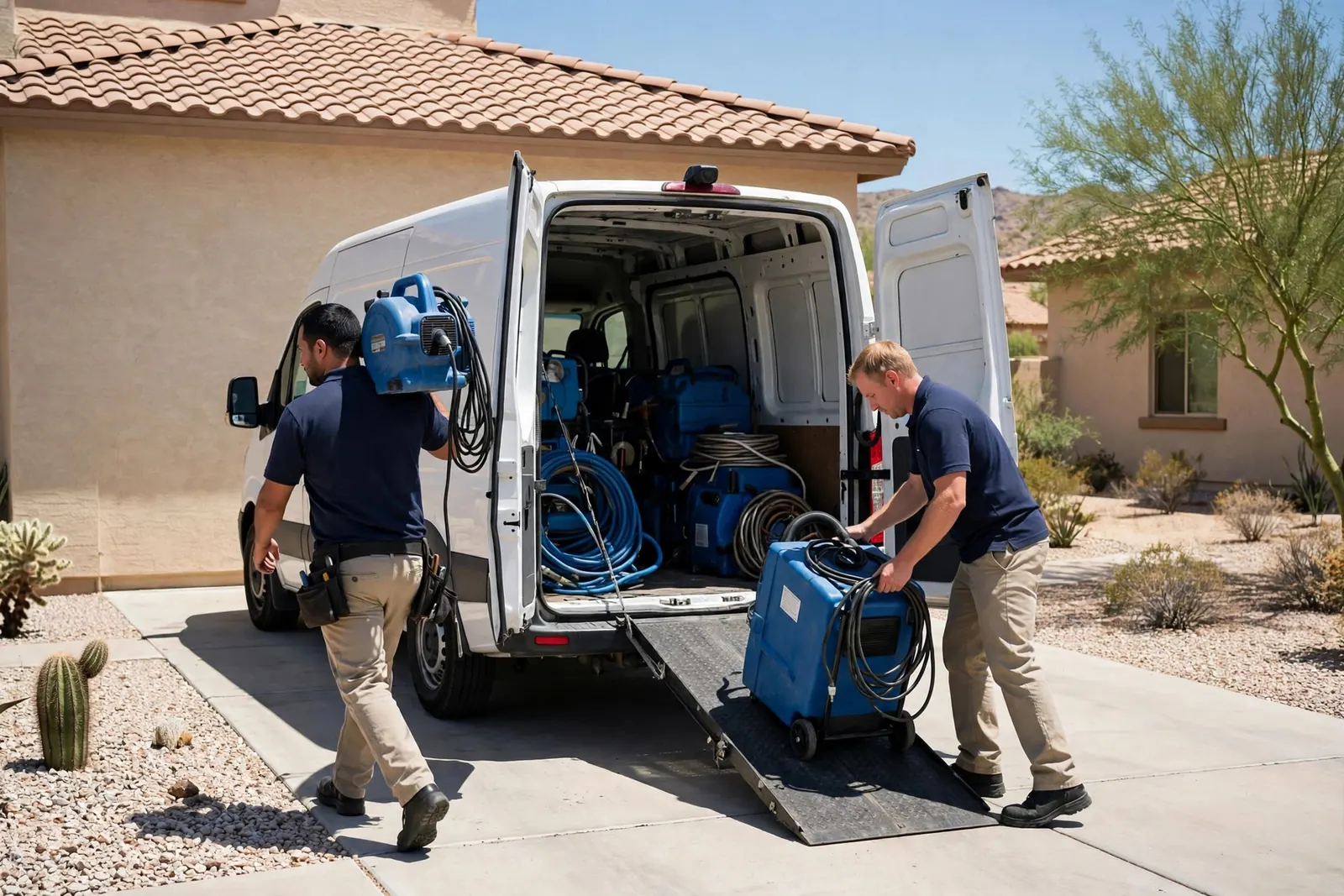
We start with the water map: which rooms took water, from above or below, and how far moisture traveled inside walls and under floors, verified with meters. Extraction follows, then controlled opening of cavities that need drying, then monitored drying with readings. Roof leaks get temporary weather-tightening coordinated as part of the visit so the next storm cell does not re-wet a drying structure, and permanent roof repair is scoped honestly: where the roof system itself needs a roofer's full repair, we will say so and document the interior scope separately. Debris and damaged materials come out as part of the documented scope, and the record, photos, readings, scope, is assembled as we go, because after a regional storm your adjuster's visit may be a week out and your evidence needs to survive until then.
The monsoon prep list that actually matters
Most storm damage we restore was preventable at the level of an afternoon of work in June. This is the list we would hand our own family:
- Roof penetrations: have pipe boots, vent flashing and the underlayment condition at valleys checked before the season. Tile can look perfect while thirty-year-old underlayment crumbles.
- Drainage: clear gutters, scuppers and downspouts of haboob dust and debris. Check that downspouts discharge away from the foundation, not beside it.
- Door and garage seals: replace cracked weatherstripping. Wind-driven rain enters at doors more often than through walls.
- Condensate lines: flush the AC drain line and confirm the secondary drain is clear. A clogged condensate line in August is an indoor flood with no storm required.
- Yard grading: soil and landscape rock should slope away from the house. Retention-area lots in Gilbert and Chandler subdivisions deserve a specific look at where water ponds against the stem wall.
- Know your shutoffs: the main water valve, the water heater valve, and your electrical panel, before you need them at midnight in a storm.
Nothing on this list guarantees a dry monsoon. It converts most of the common losses into non-events, which is the point.
Storm damage and insurance
Arizona storm claims turn on documentation and on the sudden-event rule: wind-driven rain through a storm-created opening, or a roof system the storm damaged, is a very different claim from a leak a worn roof had been nursing for two seasons. Our insurance claims guide walks through how this works and what adjusters photograph first. We document storm damage the way adjusters read it, and we never promise an outcome. After a big regional storm there is also a wave of opportunists with out-of-state plates; the checklist on our homepage for choosing a restoration company applies twice as hard in the week after a monsoon.
Frequently Asked Questions
A storm just came through and my ceiling is leaking. What do I do first?
Contain the water, protect contents, photograph everything, and call (480) 555-0100. If a ceiling is bulging, releasing the trapped water with a small puncture into a bucket saves the ceiling from a full collapse. Do not get on the roof. Extraction and drying decisions are ours to make on site; yours are safety and documentation.
Does a roof leak during a monsoon mean I need a new roof?
Usually not. Most monsoon leaks come from failed underlayment at a valley or penetration, cracked boots, or ponding seams, all repairable. A roof at end of life leaks differently and in several places. We will tell you which you have, and our job is the interior restoration either way; where the roof itself needs a roofer, we say so plainly and document the interior scope.
How fast does storm moisture become a mold problem?
The same 24 to 48 hour window as any water damage, and monsoon conditions, a hot closed house and wet insulation, are close to ideal for growth. Attics and wall cavities wet by a July storm and closed up by September are the classic East Valley mold story. Our mold remediation page covers that end of it.
Should I wait for my insurance adjuster before any work starts?
No. Policies expect you to mitigate further damage, which means extraction and drying should start before an adjuster visit that may be days away after a regional storm. Document before and during, keep every record, and the mitigation work supports rather than harms your claim.
Do you handle flooding that came through the doors, not the roof?
Yes. Ground-level flooding is extraction, sanitation assessment depending on what the water crossed on its way in, drying and repair, the same sequence with a more careful contamination judgment. Water that crossed soil, landscaping and streets is not treated as clean water.
Related Services
 Mold RemediationContainment first, then removal and HEPA filtration, with the moisture source fixed so the growth has nothing to come back to.
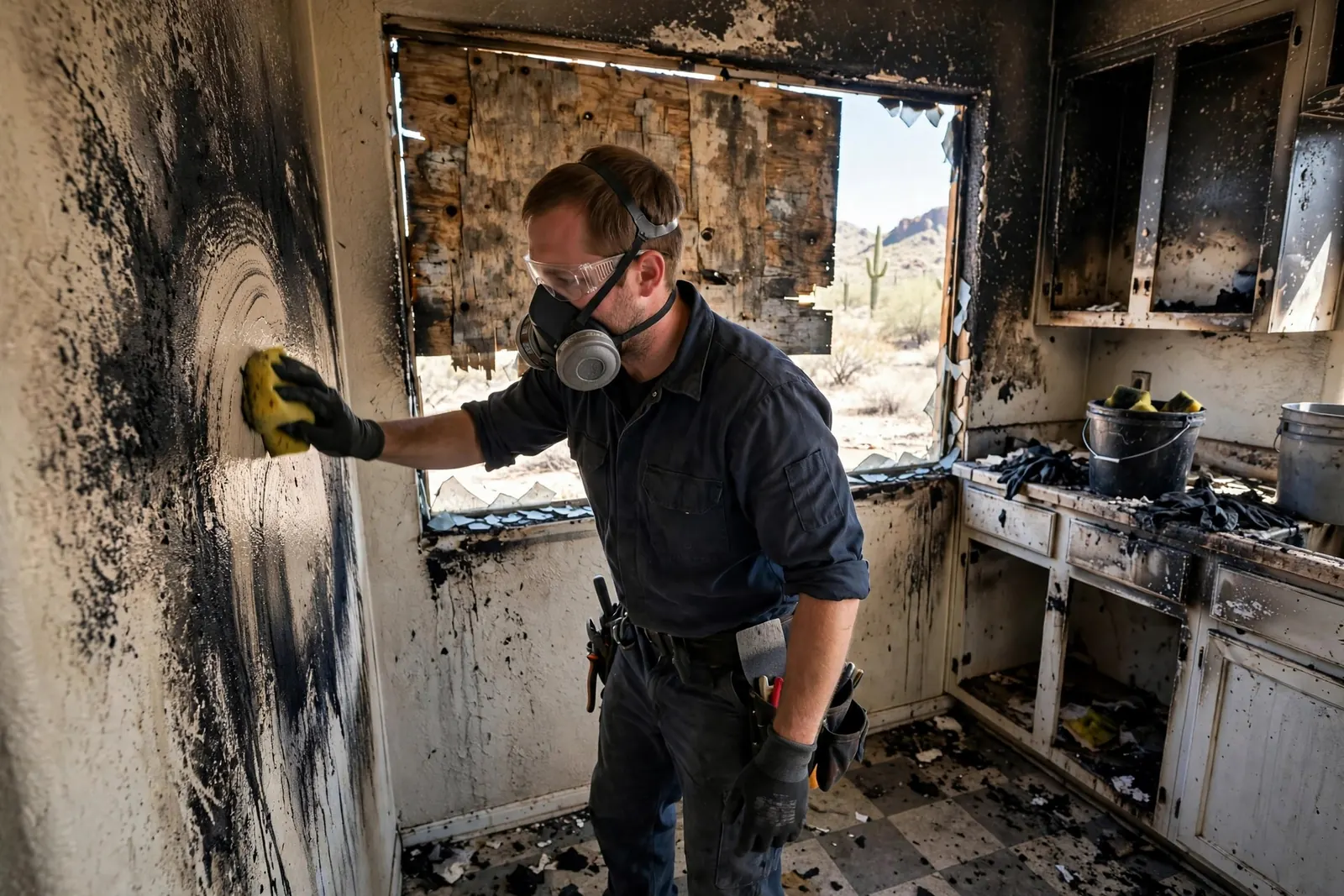 Fire Damage RestorationBoard-up, soot and smoke cleanup, odor work, and drying out the water the fire department left behind.
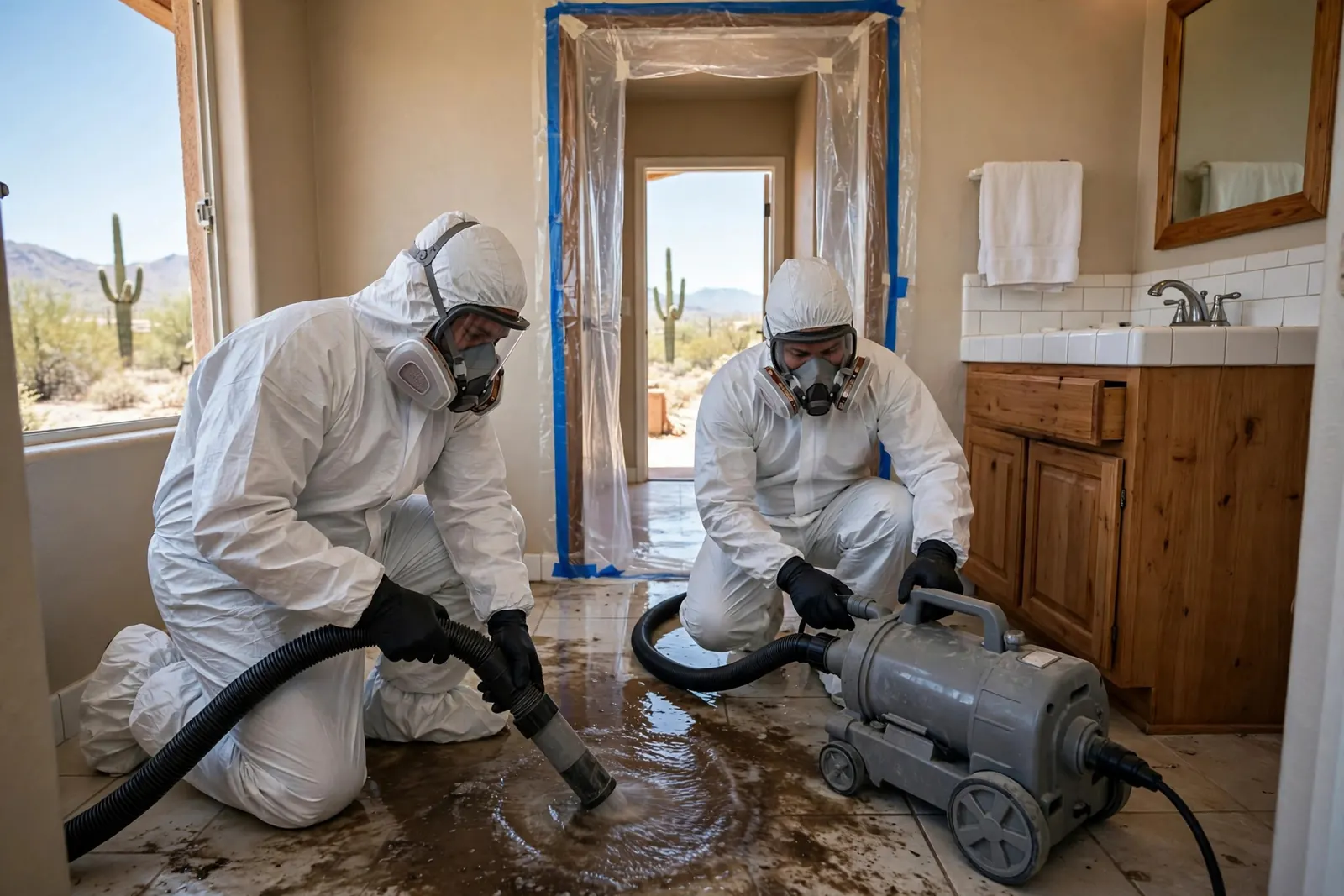 Sewage CleanupCategory 3 water handled as a health protocol: containment, removal of what cannot be sanitized, disinfection, verified drying.
Request a Storm Damage Restoration Assessment
Tell us what happened and we will call you back to schedule the assessment. Prefer to talk? Call (480) 555-0100.
FIELD FORM · QC-01