Water Damage Restoration in Chandler, AZ
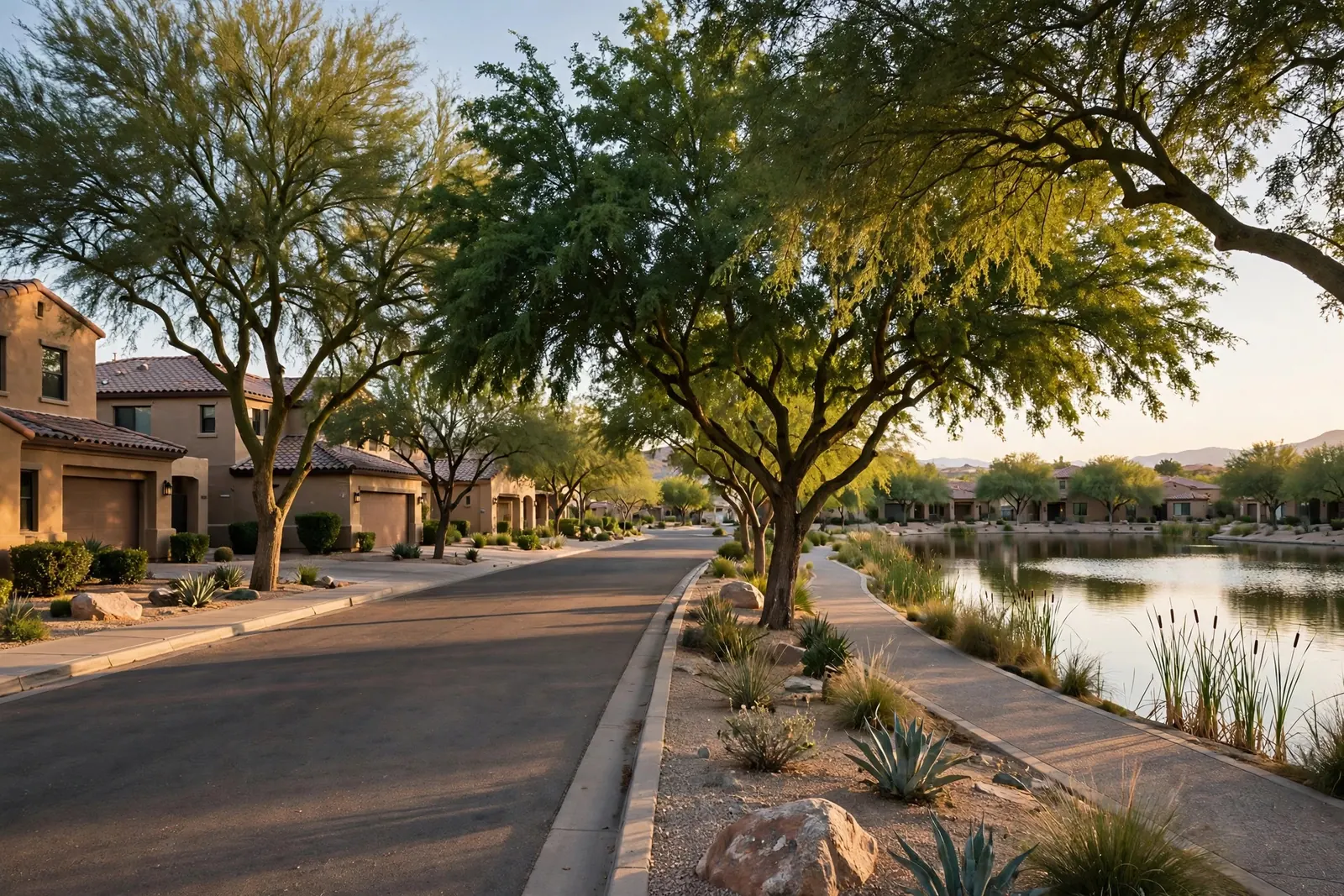
Water damage restoration in Chandler, AZ serves two cities wearing one name. South Chandler is Ocotillo and Fulton Ranch: large, newer homes around man-made lakes, with irrigation systems, water features and a lot of plumbing spread through big floor plans. North and east Chandler carry the older stock: Sun Lakes, the 1980s and 1990s subdivisions, and postwar pockets where original plumbing is reaching the end of its honest life. The water damage differs by half, and so does the restoration. San Tan Dry Co. works both halves from our Queen Creek home ground, with the same metered assessments and written scopes.
In short: our water damage restoration technicians in Chandler extract standing water, map moisture with meters and thermal imaging, dry structures to verified readings, and repair the damage, documenting every stage for your records or your claim. Call (480) 555-0100 to request an assessment.
South Chandler: lakes, irrigation and big floor plans
Ocotillo's lake system is a genuine amenity and a genuine water source: irrigation lines, lake-edge lots and water features put pressurized water close to foundations year-round, and the failures we see follow it: irrigation leaks that wet stem walls for a season before anyone notices, and supply line failures inside large plans where a leak in a guest wing or a rarely used bathroom can run for days in an empty-feeling house. Fulton Ranch follows the same pattern with its own water features and wash corridors.
The other south Chandler signature is scale. A supply line failure in a 4,000-square-foot plan does not stay in one room while the homeowner is at work: it follows the flooring, and the moisture map on arrival is often three or four rooms wide. This is the housing stock where fast extraction matters most, because the difference between a morning discovery and an evening discovery is measured in rooms, not square feet.
North and east Chandler: the aging stock
Sun Lakes and the older subdivisions tell the opposite story: smaller homes, older materials, failures of age rather than scale. Original copper and galvanized lines corrode. Cast iron drains crack. Water heaters installed when the neighborhood was new are on borrowed time, and the evaporative-cooling legacy in some older homes left ducting and ceiling details that condensate loves to find. In this stock, water damage often starts slow: a drain weeping inside a wall, a toilet wax ring failing a drop at a time, until flooring or a ceiling announces it. The restoration there is detection as much as extraction, finding how far a slow problem traveled before it showed.
Price Corridor Chandler adds a third profile: professional households, many working from home since 2020, in 1990s and 2000s stock. The failures are ordinary, supply lines, heaters, condensate, but the discovery is fast and the expectations are documentation-heavy, which suits the way we work: moisture readings, photographs and a written scope are the job file, not an extra. That stock is now twenty to thirty years old, which in plumbing years means the original angle stops, supply lines and heater anodes across whole subdivisions are expiring on roughly the same schedule their builders installed them.
What a water damage restoration technician actually does at your home
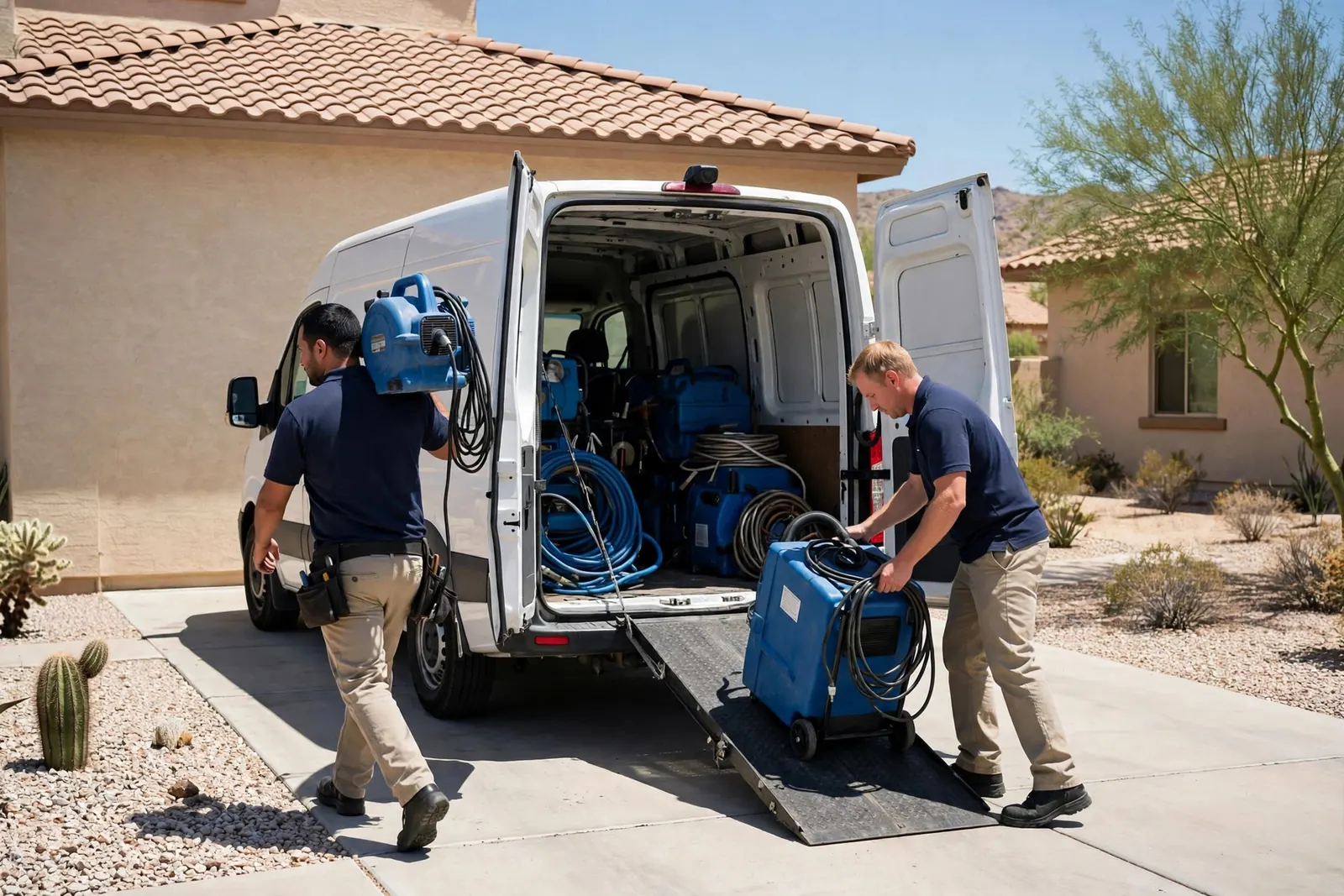
Homeowners search for a water damage restoration technician in Chandler when what they really want to know is who shows up and what they do. Here is the honest version. The technician's first job is diagnosis: finding the source if it is not already stopped, then mapping moisture with pin and pinless meters, and thermal imaging where walls are closed, so the scope follows the water rather than the stain. Then comes extraction, the removal of damaged materials where the readings require it, placement of air movers and dehumidifiers in a configuration based on the room's volume and materials, and daily re-metering until readings hit the dry standard. The equipment counts and placements are judgment, not formula: a cabinet base, a carpeted closet and an open tile living room are three different drying problems in the same house. When you interview companies, ask what their technician carries for measurement. A crew that arrives with only fans has arrived with half the job.
Emergency water damage restoration in Chandler
Emergencies in Chandler arrive in the usual forms: a heater or supply line letting go, a condensate overflow through a second-story ceiling, monsoon rain through a roof valley over the older stock's aging underlayment. The homeowner's first moves are the ones on our homepage: main shutoff, contents protected, electrical caution, then the call. Emergency water damage restoration in Chandler starts with the same honest scheduling answer we give everywhere: call (480) 555-0100, describe what is happening, and we will tell you where the job falls and what we do first when we arrive. Active water outranks everything else on the board, because an hour of extraction at the start routinely saves a day of demolition later.
The empty-house problem: travel, snowbirds and second homes
Chandler adds an occupancy pattern the other footprint cities have less of. Price Corridor professionals travel for work, sometimes for weeks. Sun Lakes includes seasonal residents whose homes sit empty through the summer, AC set high, water left on. A supply line does not care whether anyone is home, and an empty house converts a one-room loss into a whole-floor loss on a schedule set by the neighbor who eventually notices water at the garage door. Two defenses are cheap and real: shut the main valve off for any absence longer than a few days, and fit an automatic shutoff with leak sensors at the water heater and under sinks. Neither is glamorous. Both are the difference between the losses we describe on this page and the ones that never happen. If you are reading this page from a hotel room because a neighbor called, the assessment still starts the same way, only wider: the full floor gets metered on the first visit, and mold inspection joins the water scope immediately, because the water's age is unknown and the 48-hour window closed before you got the call.
Fire and water damage in Chandler: the combined loss
Chandler is also where we most often sequence fire and water work together, because its older stock produces the kitchen and electrical fires that end with suppression water through a whole floor. Fire water damage restoration in Chandler means the soot assessment and the drying plan are written together: soot stabilized before drying air moves it, suppression water extracted and cavities dried before soot cleaning closes anything up. The full process lives on our fire damage restoration page; the point here is that in Chandler's combined losses, one crew sequencing both halves is the difference between one restoration and two.
Mold after Chandler water damage
Chandler's mold profile splits by half as well. In the south, it is event mold: growth after a big supply-line loss that sat while a home was empty, or behind the soaking tubs and vanities of large master suites. In Sun Lakes and the older stock, it is the slow kind: months of a weeping drain colonizing a wall from inside. Both end at the same process, and our mold remediation page carries Chandler's full section, including why the moisture map, not the visible patch, has to set the scope.
Frequently Asked Questions
Do you serve Sun Lakes, or is that outside your area?
Sun Lakes is inside our working area and inside this page on purpose: its housing stock is some of the oldest we serve in Chandler, and its failure patterns, aging drains and heaters, original plumbing, are different from south Chandler's, so we plan assessments there accordingly. The full footprint is on our areas page.
What does a technician check during a water damage assessment in Chandler?
The source, the moisture map (walls, floors, cabinet bases, and the rooms below any upstairs water), the category of water, and the materials affected. You get the findings in a written scope with the readings behind them, and the cost guide explains how those findings become a price range.
A pipe burst while we were traveling. What happens now?
Call us and describe what you found on return. Traveling-homeowner losses are a Chandler pattern: the water ran longer, so the assessment starts wider, the whole floor's moisture map, and mold inspection becomes part of the first visit rather than a later discovery. Our insurance guide covers how insurers treat the timeline on these claims.
Can you dry a home without removing the flooring?
Sometimes, when the floor system allows drying in place and readings confirm it is working. Floating floors over wet slab almost always have to come up, because trapped moisture under an impermeable floor does not dry, it colonizes. The decision is made from readings during the first drying day, and we will show you them.
Do you handle condos and townhomes in Chandler, or only single-family homes?
Both, and the difference matters mostly in the paperwork: in a condo or townhome, the association usually carries responsibility for parts of the building shell and shared systems, while your policy covers the interior. The water, unfortunately, does not respect that division. Our documentation is built to separate the scopes cleanly, moisture readings and photographs per assembly, so your claim and the association's can each see what is theirs. The full menu of what we handle is on the services page; the restoration process itself is identical, and it starts with the same metered assessment.
Do you handle sewage backups in Chandler too?
Yes, under a different and stricter protocol: containment, removal of unsalvageable porous materials, disinfection, then drying. Our sewage cleanup page explains the sequence and why it is not negotiable.
Restoration Services in This Area
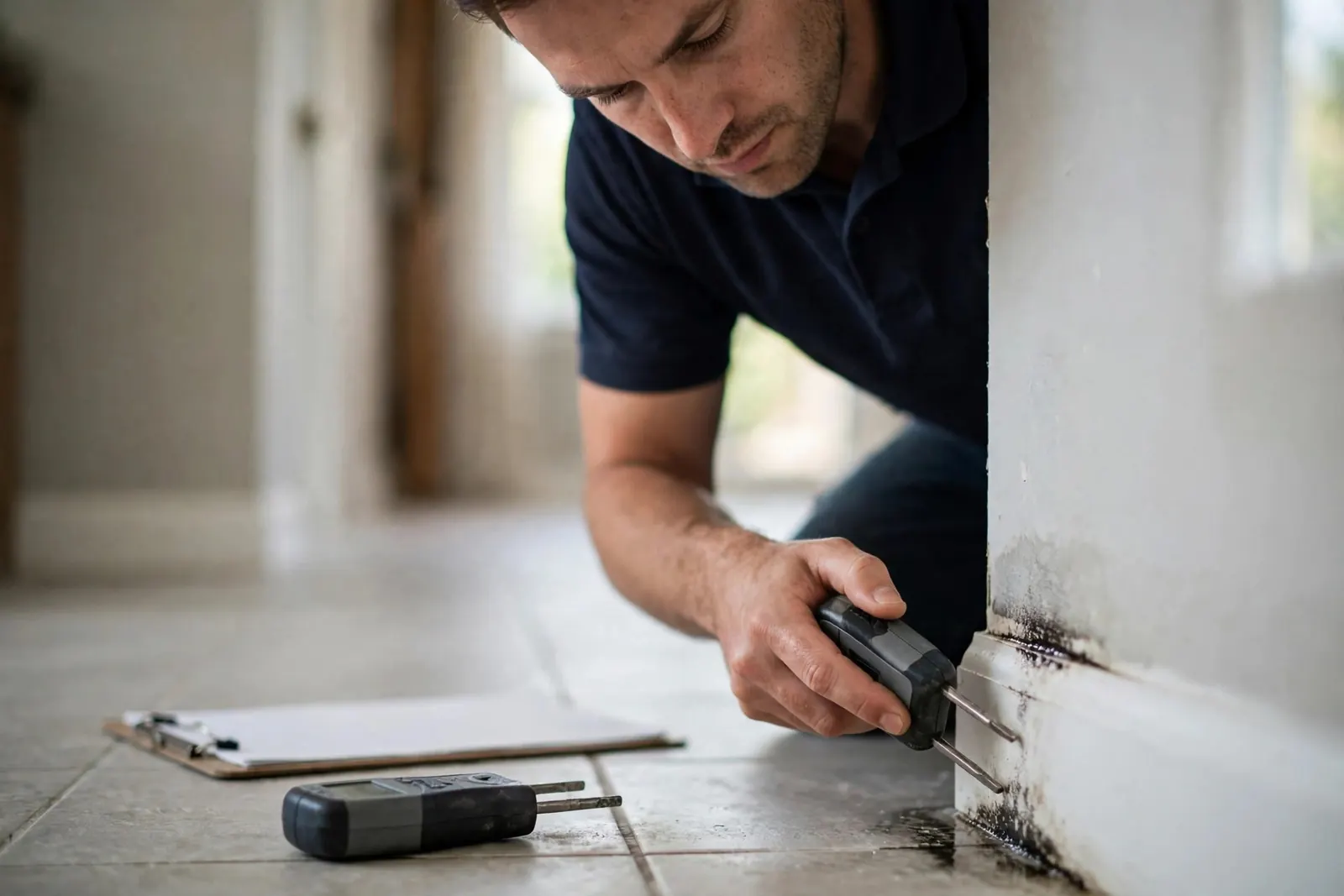 Mold RemediationContainment first, then removal and HEPA filtration, with the moisture source fixed so the growth has nothing to come back to.
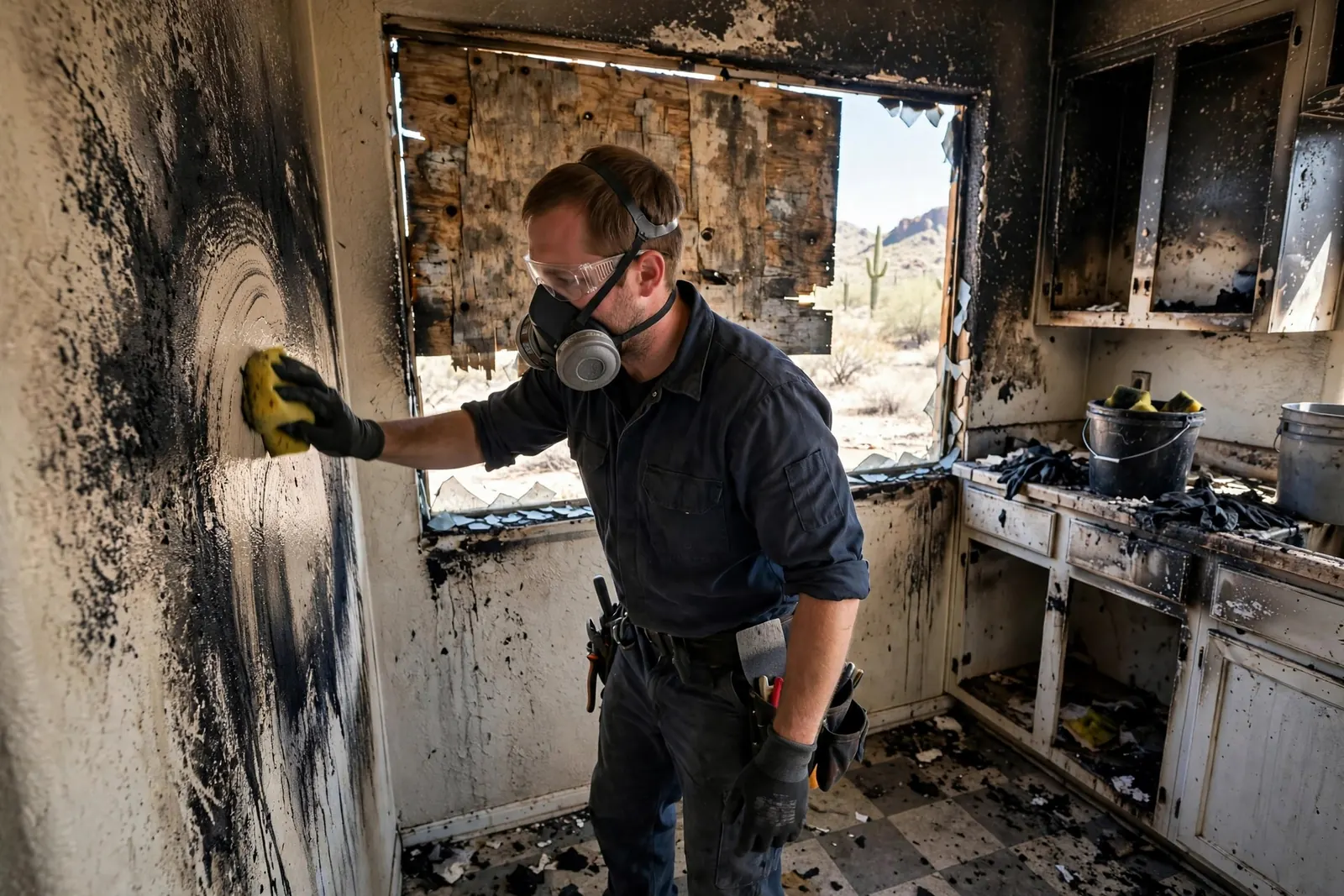 Fire Damage RestorationBoard-up, soot and smoke cleanup, odor work, and drying out the water the fire department left behind.
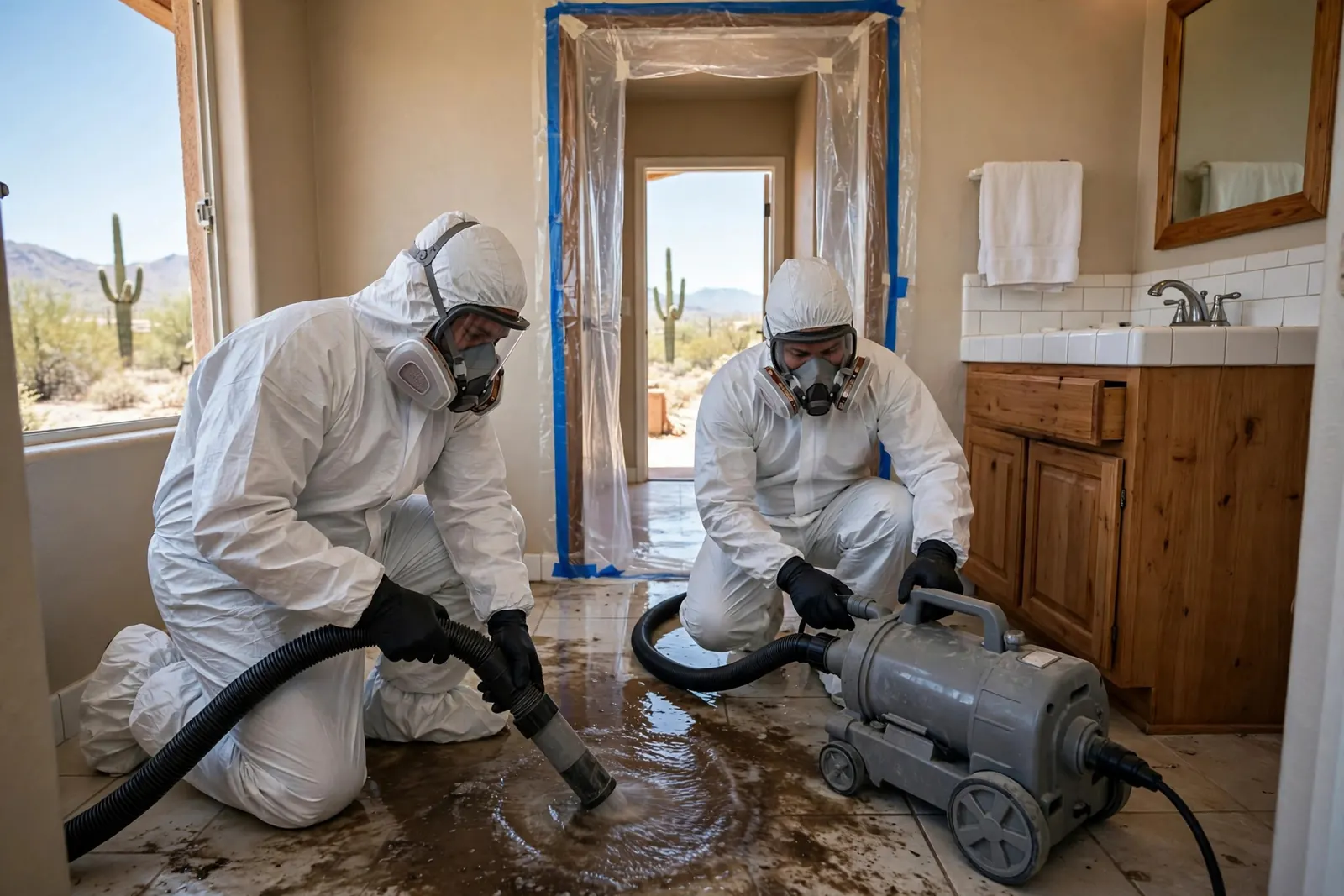 Sewage CleanupCategory 3 water handled as a health protocol: containment, removal of what cannot be sanitized, disinfection, verified drying.
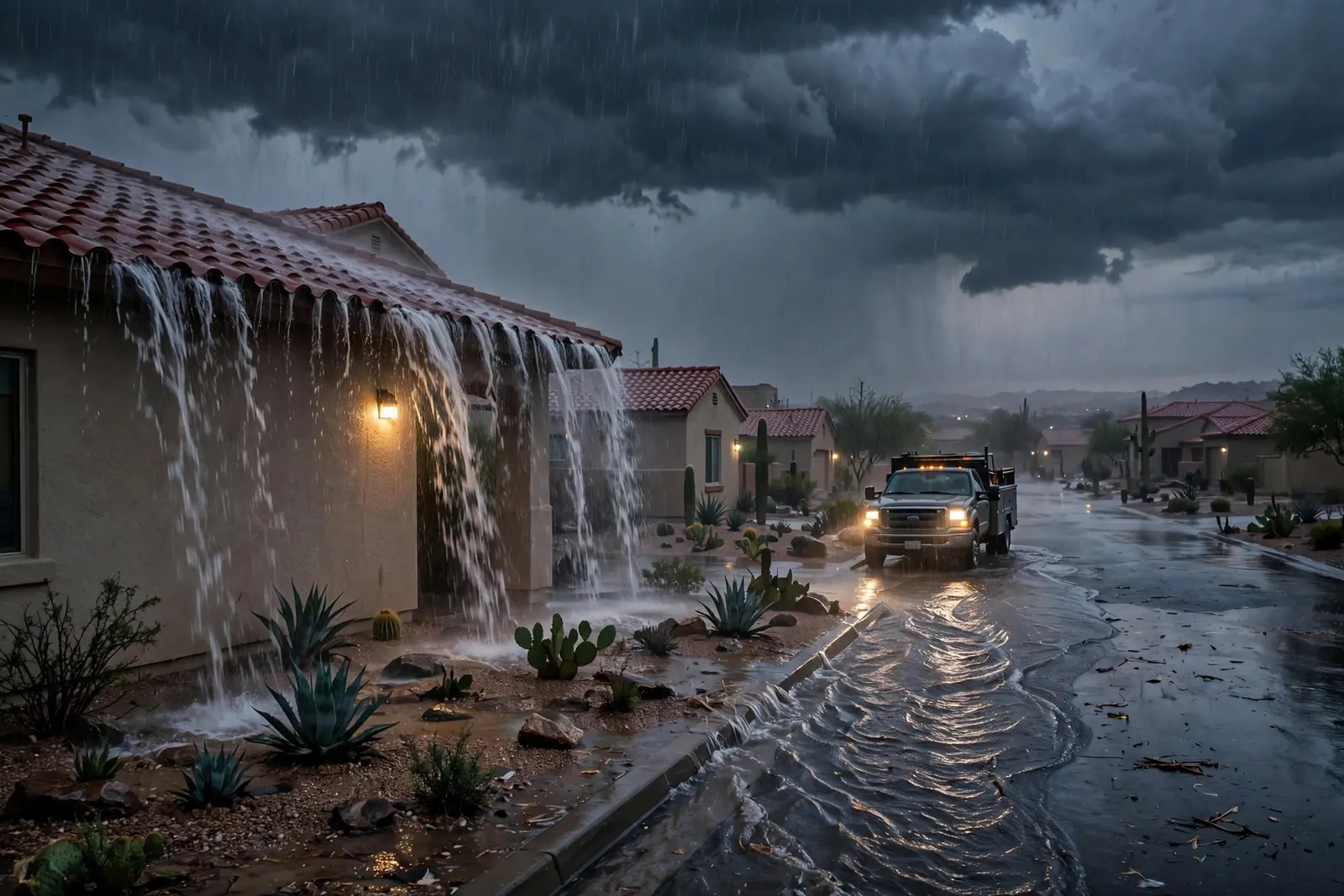 Storm Damage RestorationMonsoon roof leaks, wind-driven rain and flash flooding, plus the pre-season prep list that prevents most of it.
Request an Assessment in This Area
Tell us what happened and we will call you back to schedule the assessment. Prefer to talk? Call (480) 555-0100.
FIELD FORM · QC-01