Mold Remediation in Mesa, AZ
Mold remediation in Mesa, AZ is a desert problem with a specific shape: the mold is almost never coming from the climate outside, which is dry most of the year. It is coming from the water inside your walls: a slab leak that ran for a month, an AC condensate line dripping into a closet, a supply line weeping behind a bathroom vanity. Mold remediation that does not find and fix that moisture source is a cleaning bill you will pay twice. At San Tan Dry Co. we start with the moisture, contain and remove the growth, and leave you a record of readings showing the structure is dry enough that the mold has nothing left to live on.
Serving Mesa · Gilbert · Chandler · Queen Creek · San Tan Valley
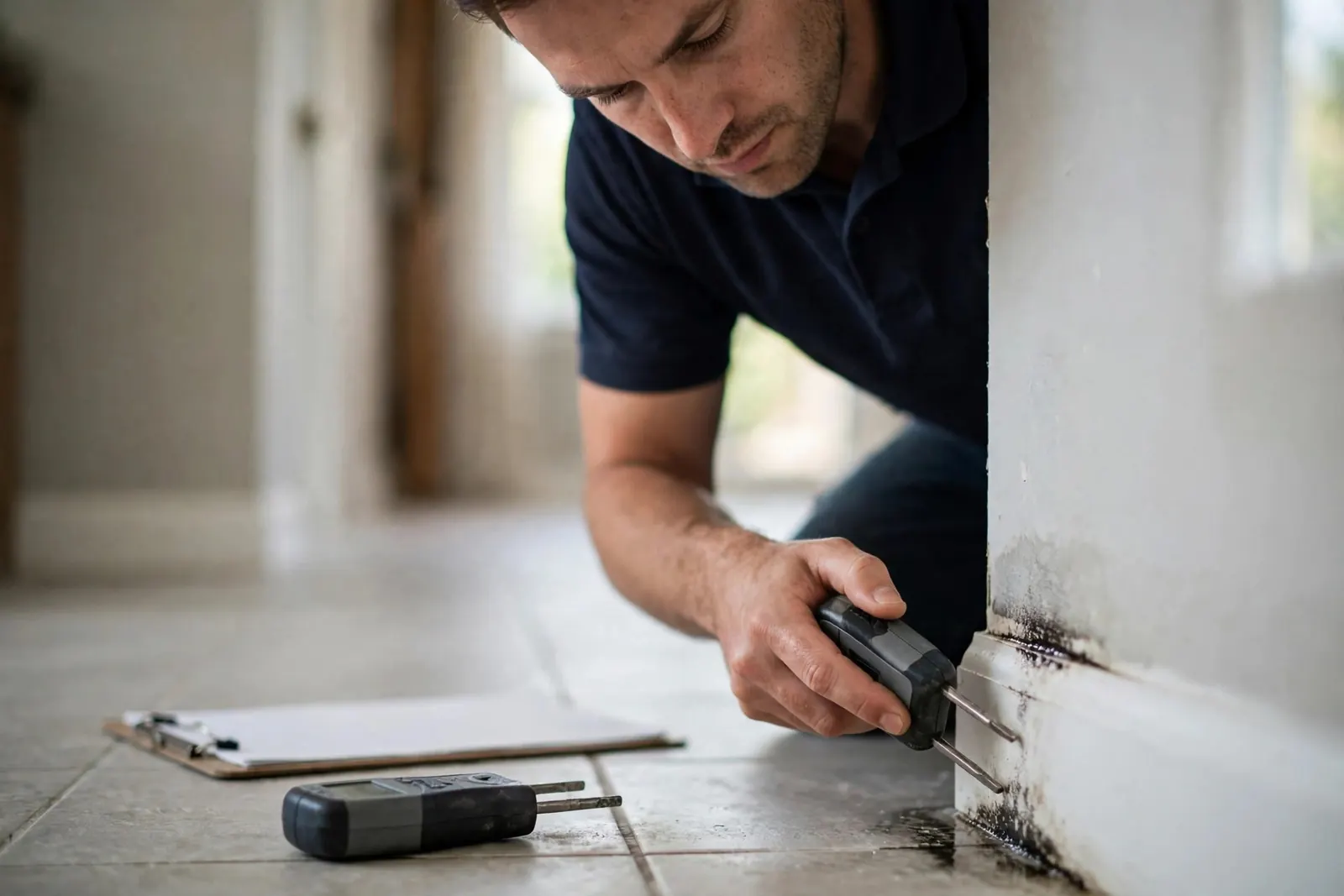
In short: mold remediation in the East Valley means inspection and moisture mapping first, then containment with negative air and HEPA filtration, removal of colonized porous materials, HEPA vacuuming and antimicrobial treatment of the rest, and drying verified by meter before anything is closed back up. Typical residential jobs in Mesa, Gilbert and Chandler run as planning ranges from about $1,500 for a contained bathroom area to $9,000 or more for multi-room growth after a long-running leak. The full breakdown is in our cost guide. Call (480) 555-0100 to request an assessment.
Why mold grows in desert homes
Mold does not need a swamp. It needs one wet wall.
People move to the East Valley expecting mold to be someone else's problem, and for the air outside, they are right. Inside a wall cavity, the climate is whatever the leak says it is. The growth we find in Mesa homes traces back to a short list of sources:
- Slab leaks. Pressurized lines under the slab develop pinholes, especially where hard water has been corroding copper for twenty years. The water wicks into flooring, baseboards and the bottom plate of walls, and the mold shows up at the floor line long before the leak is found.
- AC condensate lines. Every East Valley summer, condensate drains clog with algae and overflow into ceilings, closets and the wall behind the air handler. This is the single most common mold source we see in two-story homes.
- Bathroom and kitchen supply lines. Angle stops, toilet supply lines and refrigerator lines fail slowly. A vanity cabinet hides the first month of it.
- Monsoon moisture. A roof leak during a July storm wets attic insulation and the ceiling below it. Attic mold after monsoon season is a pattern, not a surprise.
- Swamp coolers and older evaporative systems on Mesa's older housing stock, which add moisture exactly where ducting and ceilings meet.
The practical point: if you can smell mustiness in one room, the source is usually within a few feet, and it is usually still wet. Finding it is an inspection with a moisture meter and, where walls are closed, a small inspection opening. Guessing at it from the doorway is how remediation jobs fail.
Signs you may have a mold problem
A musty or earthy odor that is stronger in one room, one closet or one cabinet. Visible growth at baseboards, around tubs and showers, on bathroom ceilings, or at the corners of windows where condensation collects. Paint bubbling or baseboards separating from the wall, which means moisture behind them. Allergy-type symptoms that ease when you leave the house can be a clue worth taking seriously, but we are not physicians and we will not diagnose anyone's health: what we can do is find and remove a growth source, and if health questions are central, your doctor and an independent testing firm are the right calls. We will say that plainly on site, too.
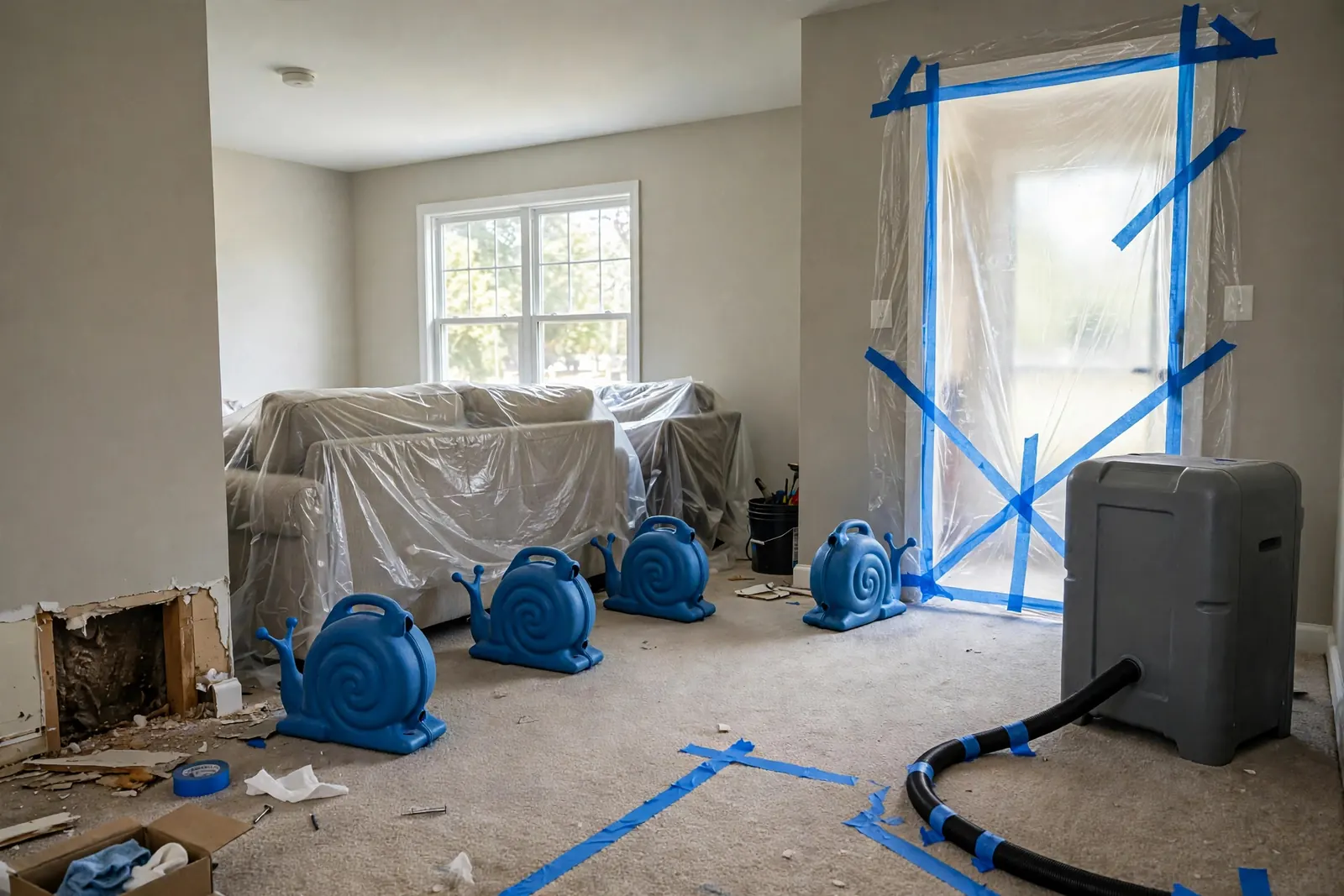
How our mold remediation runs, step by step
Step 1: Inspection and moisture mapping. We find the source first. Meters map how far moisture has traveled, and the scope is built from those readings: what is colonized, what is wet but cleanable, and what is dry and out of the job entirely.
Step 2: Fix the source. Remediation scheduled before a leak is repaired is money spent backwards. The plumbing fix comes first or alongside, and we coordinate the order so the structure can actually stay dry.
Step 3: Containment. The work area is sealed with plastic barriers and put under negative air pressure with HEPA-filtered exhaust, so spores released during removal are captured instead of distributed through your HVAC and the rest of the house.
Step 4: Removal. Colonized porous materials, drywall, insulation, carpet pad, come out and are bagged inside the containment. Mold on framing and other semi-porous surfaces is cleaned by HEPA vacuuming, scrubbing and sanding where needed. Non-porous surfaces are cleaned and treated.
Step 5: Antimicrobial treatment and drying. Cleaned surfaces get an antimicrobial application, and the structure is dried and verified by meter. Nothing gets closed up on a hopeful feeling.
Step 6: The record and rebuild list. You get photos and readings, plus the honest list of what needs rebuilding: drywall sections, baseboards, flooring. Where clearance testing is wanted, we recommend an independent testing firm rather than grading our own work, because that conflict of interest should not exist on your job.
Mold remediation in Gilbert, AZ
Gilbert's housing tells a consistent story: master-planned neighborhoods built from the 1990s through the 2010s, in Agritopia, Morrison Ranch, Val Vista Lakes and the Power Ranch edge, now old enough for the first generation of plumbing to start failing. The mold calls follow the housing. Slab leaks in homes hitting their twentieth year. Water heaters in garages corroding against hard water until a slow leak soaks the wall behind them. Condensate overflows in two-story plans where the air handler sits over finished space. Lake-community homes in Val Vista Lakes add irrigation and water-feature moisture at foundation lines.
The Gilbert pattern worth knowing: because so much of the stock was built in the same years with the same details, the failure points repeat. If your Morrison Ranch neighbor had a slab leak, that is not gossip, it is a hint about your own plumbing's age. Our Gilbert water damage page covers the broader picture of water damage restoration in Gilbert; this page is where the mold half of that story gets its full treatment. If you are in Gilbert and the musty smell is in a bathroom or the wall behind a water heater closet, request an assessment and tell us which room. That detail aims the inspection.
Mold remediation in Chandler, AZ
Chandler splits into two mold profiles. In Ocotillo and Fulton Ranch, newer and larger homes have more bathrooms, more supply lines, more AC zones, and simply more places for a slow leak to hide; the growth we find there is usually behind vanities, under soaking tubs that rarely get used, and in condensate-damaged ceilings. In Sun Lakes and Chandler's older stock, the profile is age: original plumbing near the end of its life, older evaporative and AC systems, and bathrooms where decades of shower moisture have colonized the wall behind the tile.
Chandler's other factor is occupancy. Price Corridor professionals travel, and a home empty for two weeks gives a small leak two undisturbed weeks. When you come home to a musty smell, the growth you can see is the young part. The part inside the wall is older. Our Chandler water damage page covers water damage restoration in Chandler generally; for mold specifically, the inspection needs to start from the moisture map, not from the visible patch, because the visible patch is rarely the whole colony.
Mold inspection in Queen Creek, AZ
Queen Creek is home ground, and its mold story is its newness. Cortina, Hastings Farms, Ironwood Crossing and Sossaman Estates are young neighborhoods, so the mold we find here is rarely about age. It is about events: a supply line that failed in a five-year-old house, a condensate line that clogged in its third summer, a monsoon roof leak over the Ranchettes that wetted an attic nobody had been up in. A mold inspection in Queen Creek means tracing an event to its full footprint: metering the walls around the source, checking the attic after roof leaks, and checking the rooms below bathrooms and laundry rooms on the second floor.
If you are in Queen Creek and you are at the "something smells off" stage, that is exactly when an inspection is cheapest and most useful, before anyone opens a wall on a hunch. Call (480) 555-0100 and describe the room and the smell. We will tell you what an inspection would look for and what it will cost, in that order.
Mold, mildew, and the limits of DIY
Mildew is the surface growth you see on shower grout and around sinks: flat, powdery, and a cleaning problem. Mold colonization inside materials is a different thing, and confusing the two runs both ways: people panic over grout mildew that a brush handles, and people bleach a baseboard while the wall behind it stays colonized. Bleach on porous materials is mostly water, and water is the problem. Small surface areas on non-porous material are a reasonable DIY. Anything inside a wall, anything larger than a small patch, anything fed by an ongoing leak, and anything in a home where someone has respiratory issues belongs to a remediation crew with containment. The line is not the size of what you see. It is whether the material itself is colonized and whether the moisture source is fixed.
What mold remediation costs in the East Valley
Planning ranges, not quotes: a contained single-area job, one bathroom wall section with the source fixed, commonly runs $1,500 to $3,500. A room-scale job with containment, drywall removal and framing treatment commonly runs $3,500 to $7,000. Multi-room growth after a long-running slab leak, with rebuild, goes higher. What moves a number: the amount of porous material that must come out, whether the source repair is part of the job, and how much rebuild follows. The cost guide breaks the ranges down with the disclaimers attached, and our insurance guide explains the coverage question honestly: mold from a sudden covered water event is often covered up to a policy limit, while mold from a long-ignored leak often is not. Anyone who quotes your job from a photograph of the visible patch is pricing the small part of it.
Frequently Asked Questions
How do I know if I need mold remediation or just cleaning?
If the growth is on a non-porous surface (tile, glass, metal, sealed fixtures) and small, cleaning handles it. If it is in or on drywall, baseboards, carpet, insulation or wood, or it keeps coming back after cleaning, the material is colonized and remediation is the right call. An inspection with moisture metering settles it, because the question is never just the patch you see, it is what the wall behind it holds.
Can mold come back after remediation?
Yes, if the moisture source survives. Remediation removes the colony; only fixing the leak and verifying the structure is dry removes the cause. That is why our process starts with the source and ends with meter readings, and why we will not schedule removal ahead of a source repair that has not happened.
Is the mold in my home dangerous?
We are remediators, not doctors, and honest companies say so. Mold exposure affects people differently, and any visible indoor growth is worth removing rather than living with. If health symptoms are your main concern, talk to your physician, and consider independent air testing before and after the work. We will remove the growth and its moisture source, and we will not sell you fear to do it.
Do you handle mold testing?
We inspect and moisture-map, and we can take surface samples when identification is genuinely needed. For pre- and post-remediation air testing, we recommend an independent testing firm that does not perform remediation, so your clearance result is not graded by the company that did the work. That separation protects you, and we would rather have it than not.
How long does mold remediation take?
A contained single-area job usually runs one to two days of on-site work. Room-scale jobs run two to four days including drying verification. Rebuild (drywall, paint, flooring) is scheduled after the structure passes its dry check, and your written scope will show the sequence before we start.
My mold is in Mesa but the leak came from a monsoon roof problem. Is that your job too?
Yes. Monsoon-driven mold is one of the patterns on our storm damage restoration page, and the sequence is the same: the roof leak gets addressed, the wet insulation and ceiling come out, and the attic and framing are dried and treated before anything is closed.
Related Services
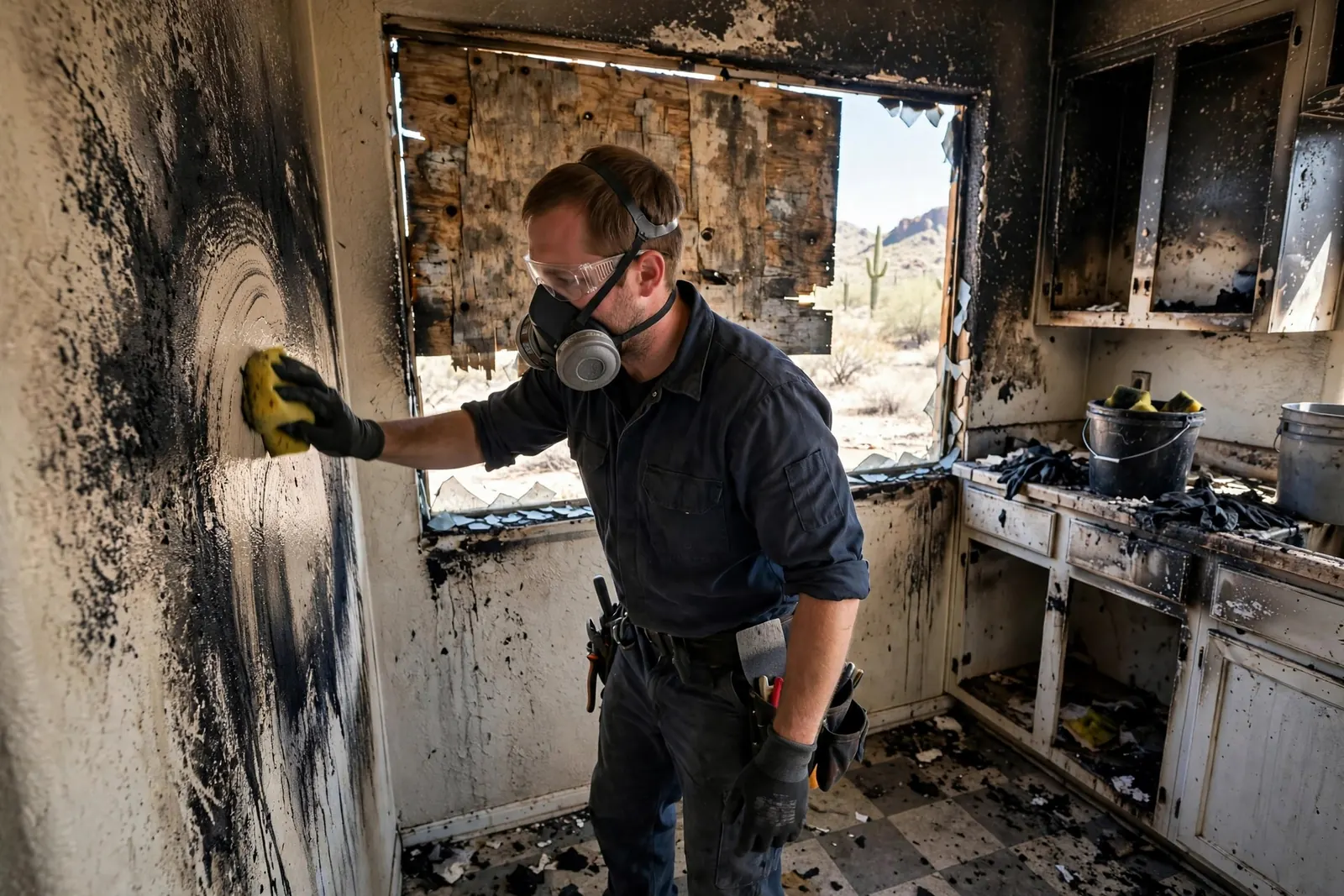 Fire Damage RestorationBoard-up, soot and smoke cleanup, odor work, and drying out the water the fire department left behind.
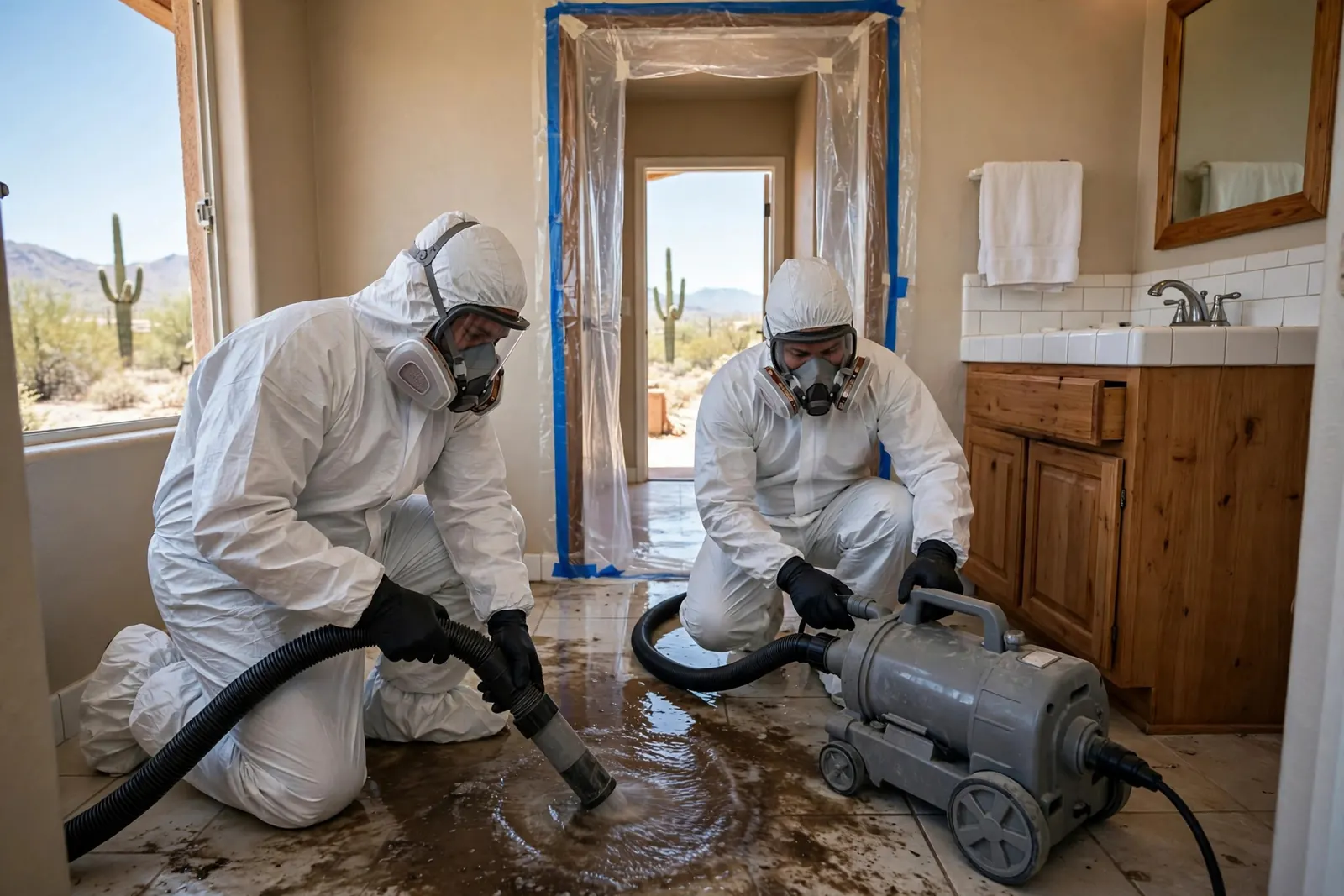 Sewage CleanupCategory 3 water handled as a health protocol: containment, removal of what cannot be sanitized, disinfection, verified drying.
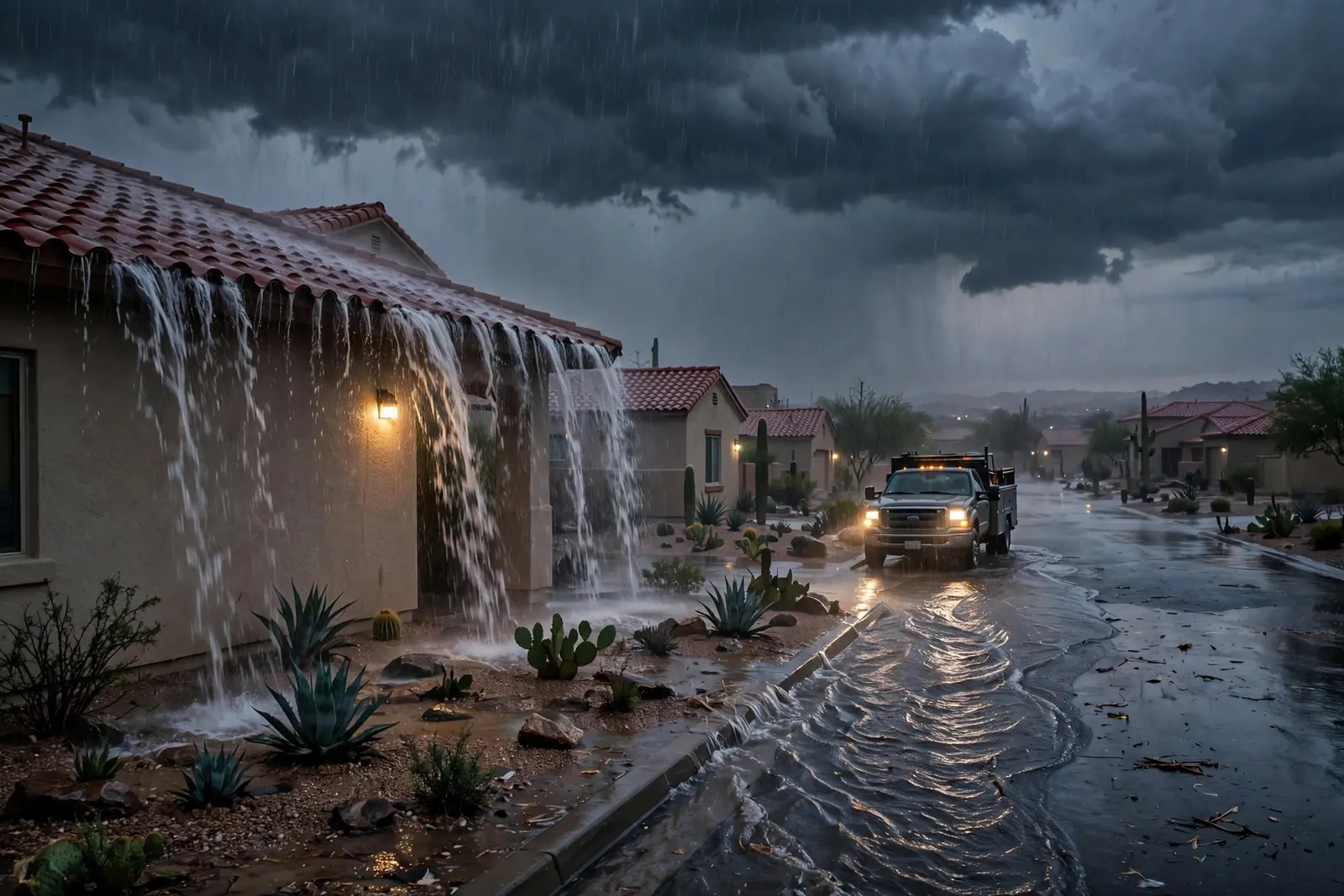 Storm Damage RestorationMonsoon roof leaks, wind-driven rain and flash flooding, plus the pre-season prep list that prevents most of it.
Request a Mold Remediation Assessment
Tell us what happened and we will call you back to schedule the assessment. Prefer to talk? Call (480) 555-0100.
FIELD FORM · QC-01