Water Damage Restoration in Mesa, AZ
Water damage restoration in Mesa, AZ covers the widest housing spread in the East Valley, because Mesa itself spans seventy years of building in one city. Eastmark and the east Mesa master plans are new construction with new-construction failure modes. Las Sendas and Red Mountain Ranch are 1990s and 2000s stock reaching plumbing middle age. Central and west Mesa carry postwar homes with cast iron drains, galvanized lines and evaporative-cooling history. A restoration company that treats Mesa as one market will misread at least two of those three. San Tan Dry Co. works Mesa from our Queen Creek and East Valley routes with one process, metered assessment, written scope, documented drying, applied to whichever Mesa your house actually is.
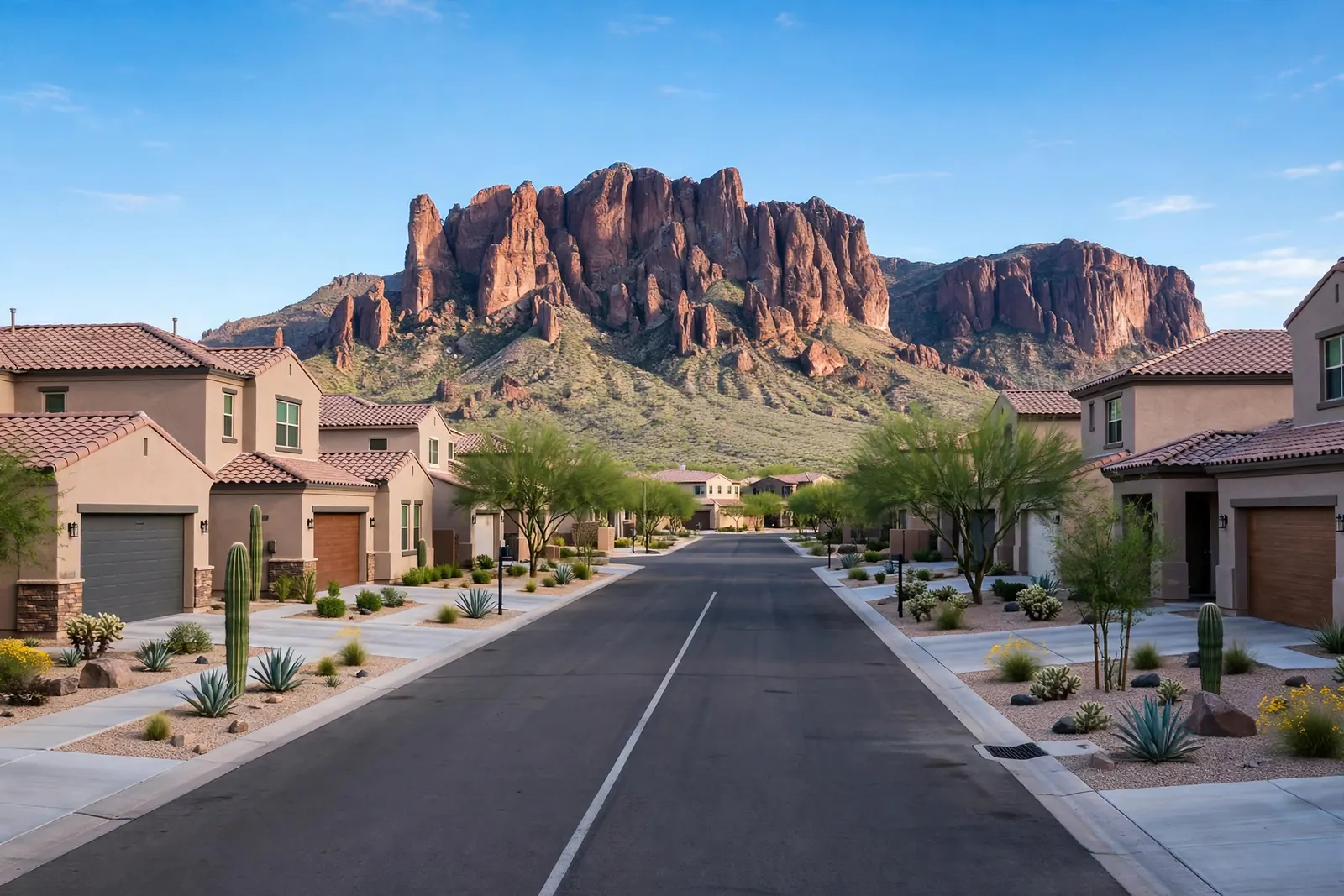
In short: we provide residential water damage restoration across Mesa: extraction, cleanup, structural drying to verified moisture readings, mold remediation where growth has started, and repair of what the water damaged. Call (480) 555-0100 to request an assessment.
New Mesa: Eastmark, Las Sendas and the east side
The newest Mesa plans, Cadence and Eastmark, fail the way new Arizona housing fails. Supply lines and fittings under warranty-age homes still let go, and when they do, open plans spread the water wide before anyone sees it. Water heaters sit in garages against walls shared with living space. AC condensate lines clog early and often in dusty new-build areas where construction grit is still in the systems. In Las Sendas and Red Mountain Ranch, add fifteen to twenty-five years: the first generation of plumbing is at the age where angle stops seize, supply lines fatigue, and the underlayment beneath those tile roofs has outlived its rating while the tile above it looks new. Monsoon season tests that underlayment every July, and the ceiling stains that follow are a Las Sendas tradition nobody wants a part of.
The restoration point for newer Mesa: speed and documentation. These are insured, warrantied, high-finish homes where the drying record and the moisture map are what keep a water event from becoming a dispute with a builder, an insurer and an HOA all at once.
Old Mesa: postwar stock and plumbing at end of life
Central and west Mesa's housing tells the long story. Homes from the 1940s through the 1970s, built for evaporative cooling and later converted, carry drain and supply materials that are simply old: cast iron that has corroded thin, galvanized lines narrowed to a fraction of their bore, Orangeburg and clay laterals in the ground. Water damage here usually starts as a slow interior story: a drain weeping in a wall, a slab leak under a bathroom, roots in a lateral line that ends as a sewage backup on a holiday weekend. By the time it announces itself, the moisture map is a month wide.
Restoration in old Mesa is detective work first. Where has the water actually been, and for how long? Which materials, plaster, real wood floors, older drywall, behave differently when wet and when dried? The extraction matters, but the honest moisture map matters more, because closing up an old wall that metered wet is how a repair becomes a mold remediation project by winter.
Water damage cleanup in Mesa: what the words actually cover
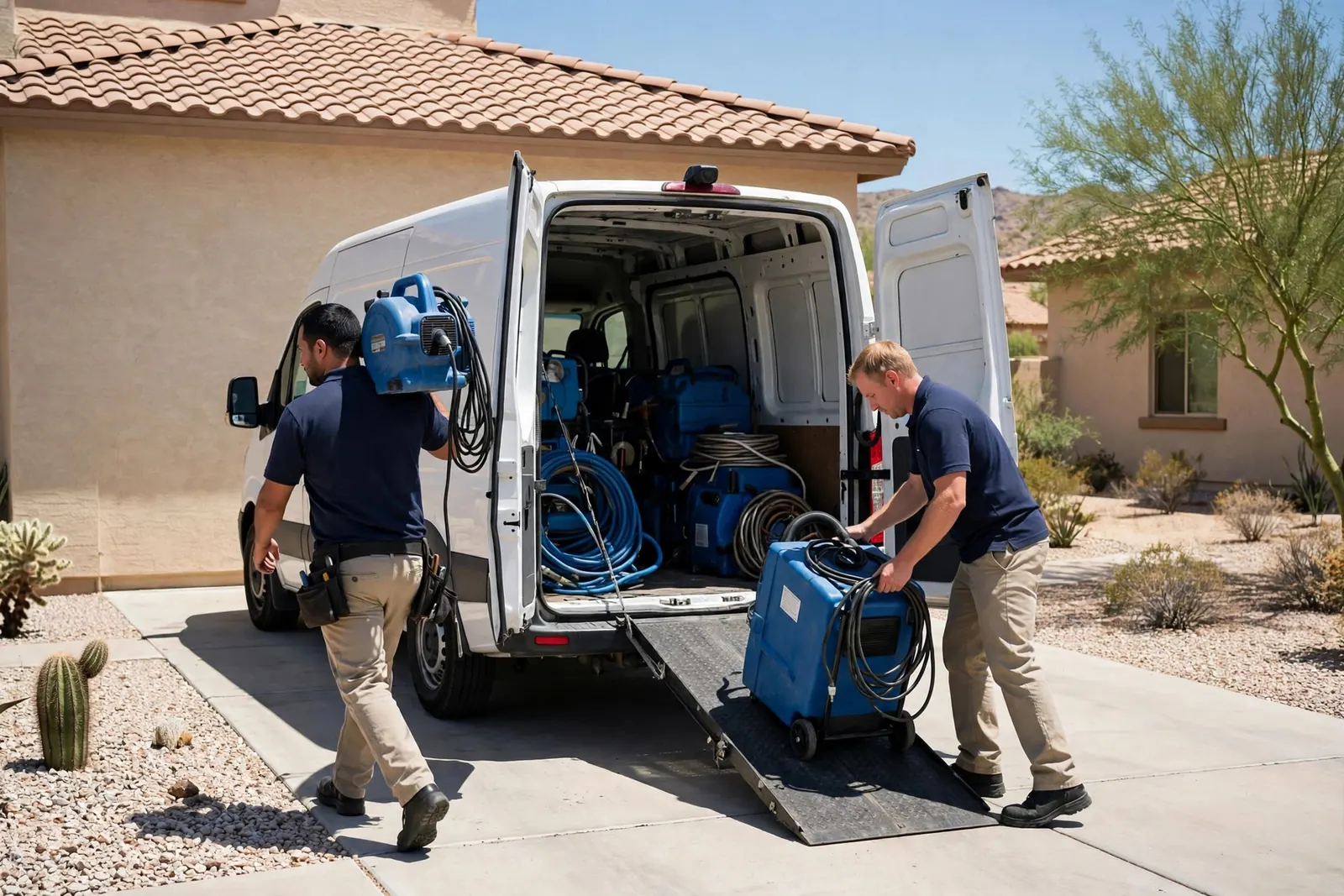
Homeowners searching for water damage cleanup in Mesa are usually picturing the visible part: water out, floors mopped, fans running. Real cleanup is a sequence, and the order is the substance. First, extraction of standing water with equipment sized to the volume, not a shop vacuum. Second, removal of materials that cannot be dried or cannot be sanitized: carpet pad that took dirty water, baseboards swollen past saving, drywall sections opened to dry the cavity behind them. Third, cleaning of the surfaces that remain, because flood and leak water leaves residue, silt after monsoon events, and contamination graded by the water's category. Fourth, the drying itself, which is engineering, not weather: air movement and dehumidification placed by room volume and material, verified daily. A company that skips to step four has not cleaned your house; it has dried your dirt. When you compare Mesa AZ water damage restoration service options, ask each one to describe their cleanup sequence. The answers separate the field faster than any review page.
Same day water damage restoration in Mesa: the honest version
Same day water damage restoration in Mesa is a reasonable thing to want and a specific thing to promise, so here is what we can say plainly. Extraction is the time-critical step, and active water is what we schedule first, ahead of rebuilds and routine assessments. If you call in the morning about a heater that failed overnight, the realistic goal is a crew extracting and setting drying the same day, and we will tell you on that call whether we can do it and what time the window is. What we will not do is print a guarantee no honest operator controls, because regional monsoon days stack every company's board at once. The trade for that honesty: when we give you a window, it is a real one, and the assessment that follows it is metered and written, not a fan count and a handshake.
24 hour water damage restoration in Mesa: what round-the-clock actually means
Water does not keep business hours, and neither do water heaters. The 2 a.m. version of this job is specific: you are standing in water, the main shutoff is the first tool (for most Mesa homes, at the front of the property or in the garage), and what you need from a company at that hour is a person who answers, tells you how to stop the damage from growing, and gets extraction scheduled as the first work of the emergency rather than the first work of the week. That is what 24 hour water damage restoration in Mesa should mean in practice, and it is how we run it: the phone is answered by people who know the work, the shutoff guidance comes first, and the clock that matters, the 24 to 48 hours before mold colonizes wet drywall, is the clock the schedule is built around. If your water event is happening now, call (480) 555-0100 and start with what is wet and whether the water is still running.
Residential water damage restoration in Mesa, and the edges of it
This site is a residential practice: single-family homes, townhomes and condos across Mesa, from Eastmark to the Superstition foothills to the Fiesta District. Residential water damage restoration in Mesa is its own discipline because homes are occupied during the work: families live around drying equipment, contents need triage and protection, and the scope has to respect that the kitchen being dried is also the kitchen being used. Where a loss is genuinely commercial in scale or system, a large multi-tenant building, a warehouse, we will say so at the assessment and point you to the right scale of operator rather than take a job sized wrong for us. That honesty runs both ways on this page: everything described here, we do, in Mesa homes, with our own technicians. The services page holds the full list in one place.
Mesa monsoons, Mesa washes
Mesa's storm water has local habits. Runoff from the Superstition side and the Salt River bed system, washes that cross established neighborhoods, and flat commercial-era grading in the older grid mean monsoon water arrives at doors and garage seals in specific, predictable places. Our storm damage restoration page covers the full monsoon picture, including the prep list. For Mesa specifically, the pre-season items that pay are underlayment and valley checks on the 1990s and 2000s tile stock, and drainage at the stem wall on older homes where decades of landscaping have raised the soil line above where the builder left it.
Frequently Asked Questions
How much does water damage restoration cost in Mesa?
The planning ranges and what moves them are in our cost guide. Mesa's spread means the range genuinely matters: a condensate ceiling in Eastmark and a month-old slab leak in a 1950s ranch are different jobs by an order of magnitude, and anyone quoting either from a phone call is guessing with your money.
My Mesa home is older, with plaster walls and wood floors. Can they be dried?
Often, yes, and the materials are exactly why the assessment has to be metered rather than visual. Plaster and solid wood behave differently from drywall and laminate: slower to wet through, slower to dry, and worth more effort to save. We will show you the readings and the reasoning either way.
Do you serve all of Mesa, or only the east side?
All of it: Eastmark, Cadence and the east Mesa plans, Las Sendas and Red Mountain Ranch, the downtown and Fiesta grids, and the older west side stock. Our areas page shows the full footprint, including Gilbert and Chandler next door.
How fast does a Mesa water problem become a mold problem?
The standard window: mold colonizes wet porous material within 24 to 48 hours, and older Mesa stock adds a wrinkle, because slow leaks in old walls may have growth established before the water is ever seen. Our Mesa assessments meter and inspect for that reason, and the mold page leads with Mesa for the same reason.
A company quoted me over the phone without visiting. Is that normal?
It is common and it is not sound. A phone number for water damage restoration is a guess dressed as a quote, because the price lives in the moisture map, which lives in your walls. Expect any real figure to follow an in-person assessment, in writing, with the readings attached. That is the standard we publish our ranges against, and the one we would be judged by.
Restoration Services in This Area
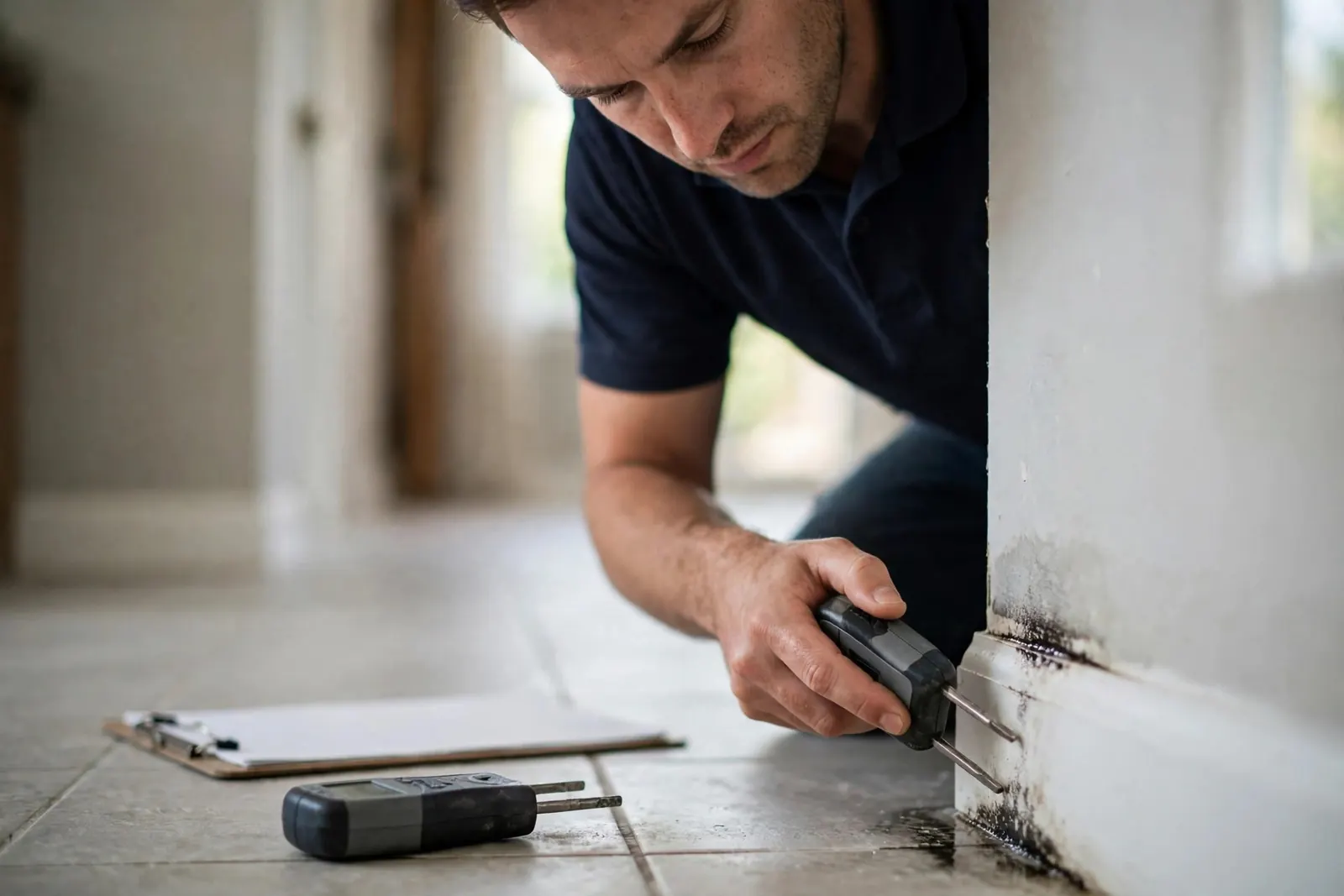 Mold RemediationContainment first, then removal and HEPA filtration, with the moisture source fixed so the growth has nothing to come back to.
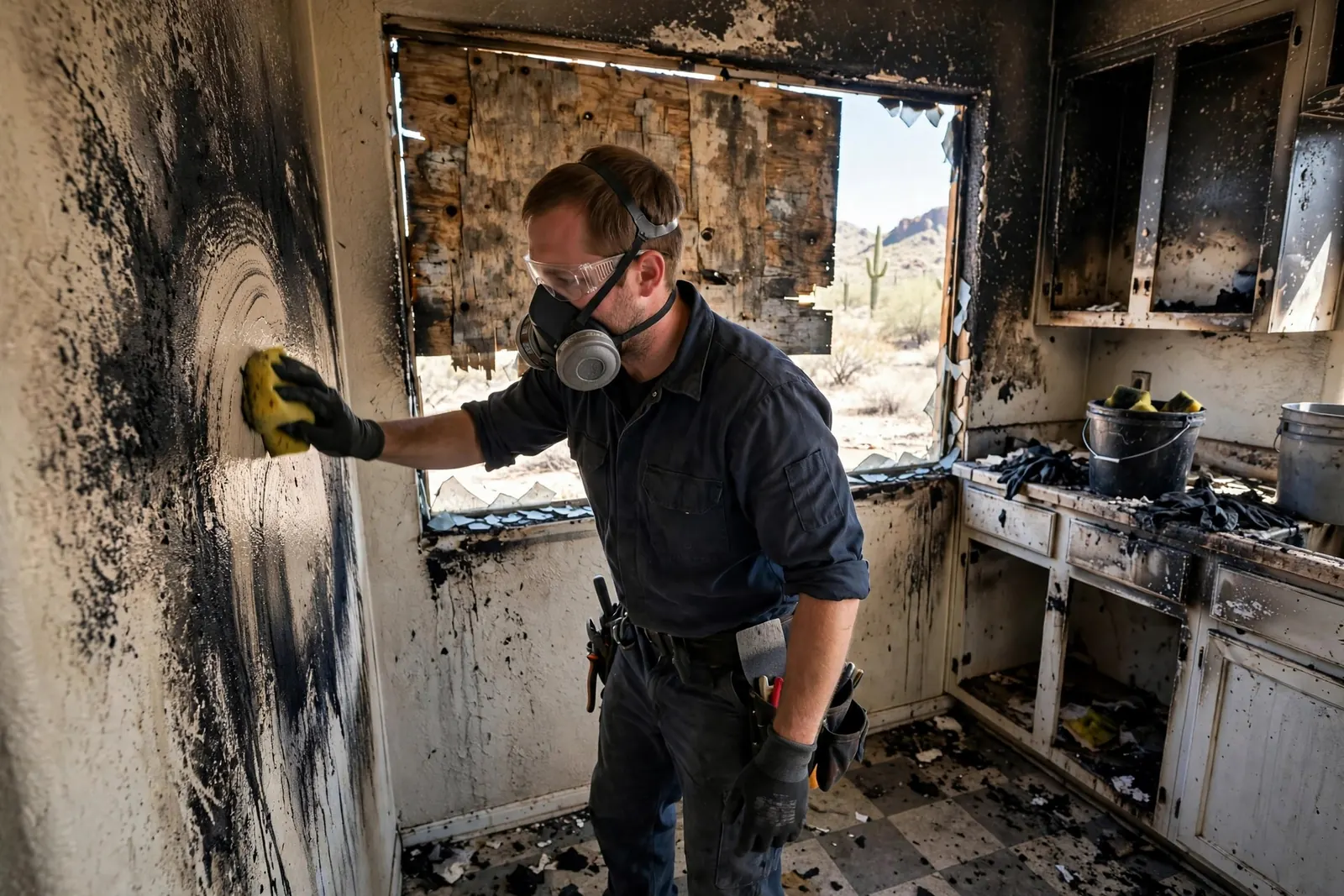 Fire Damage RestorationBoard-up, soot and smoke cleanup, odor work, and drying out the water the fire department left behind.
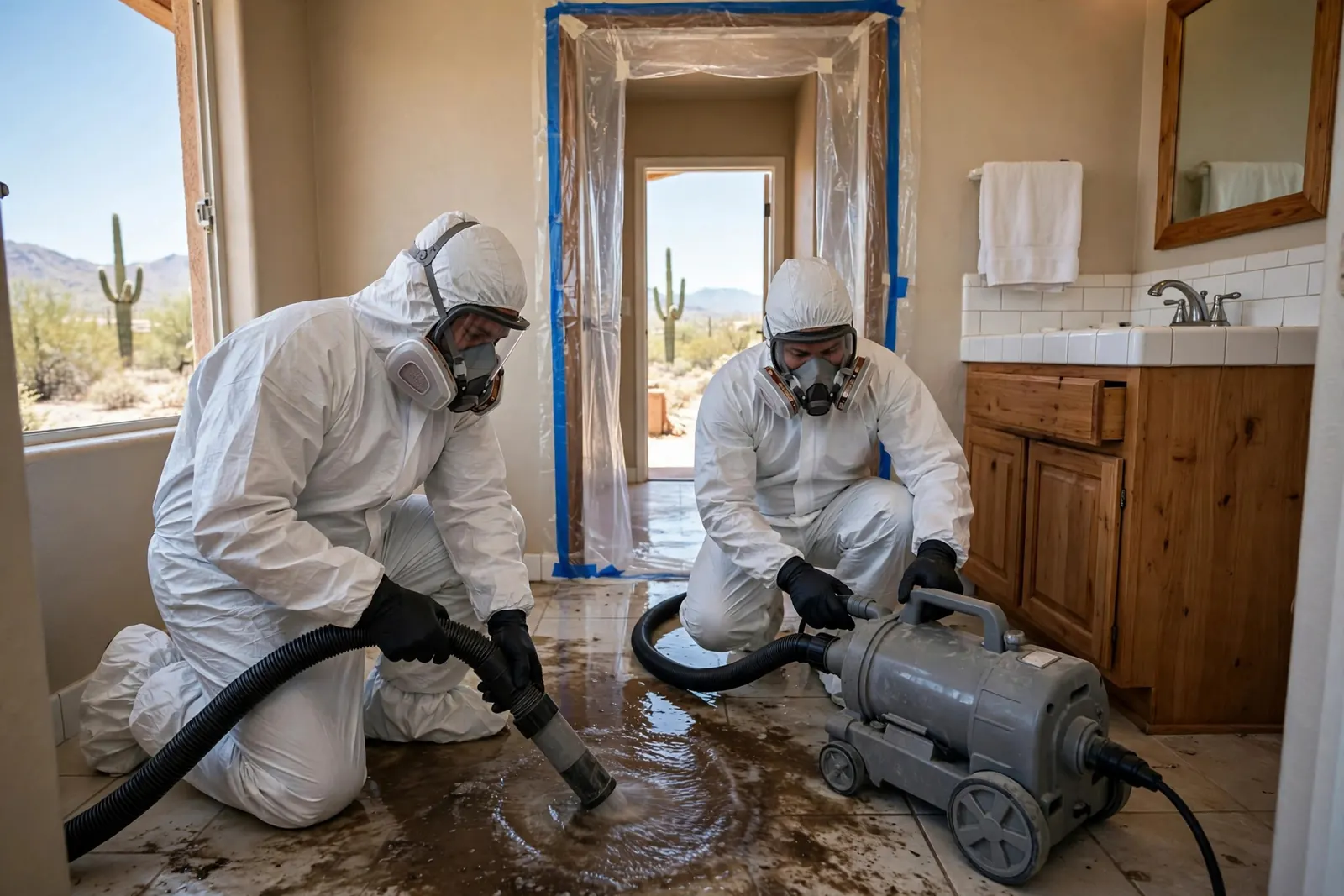 Sewage CleanupCategory 3 water handled as a health protocol: containment, removal of what cannot be sanitized, disinfection, verified drying.
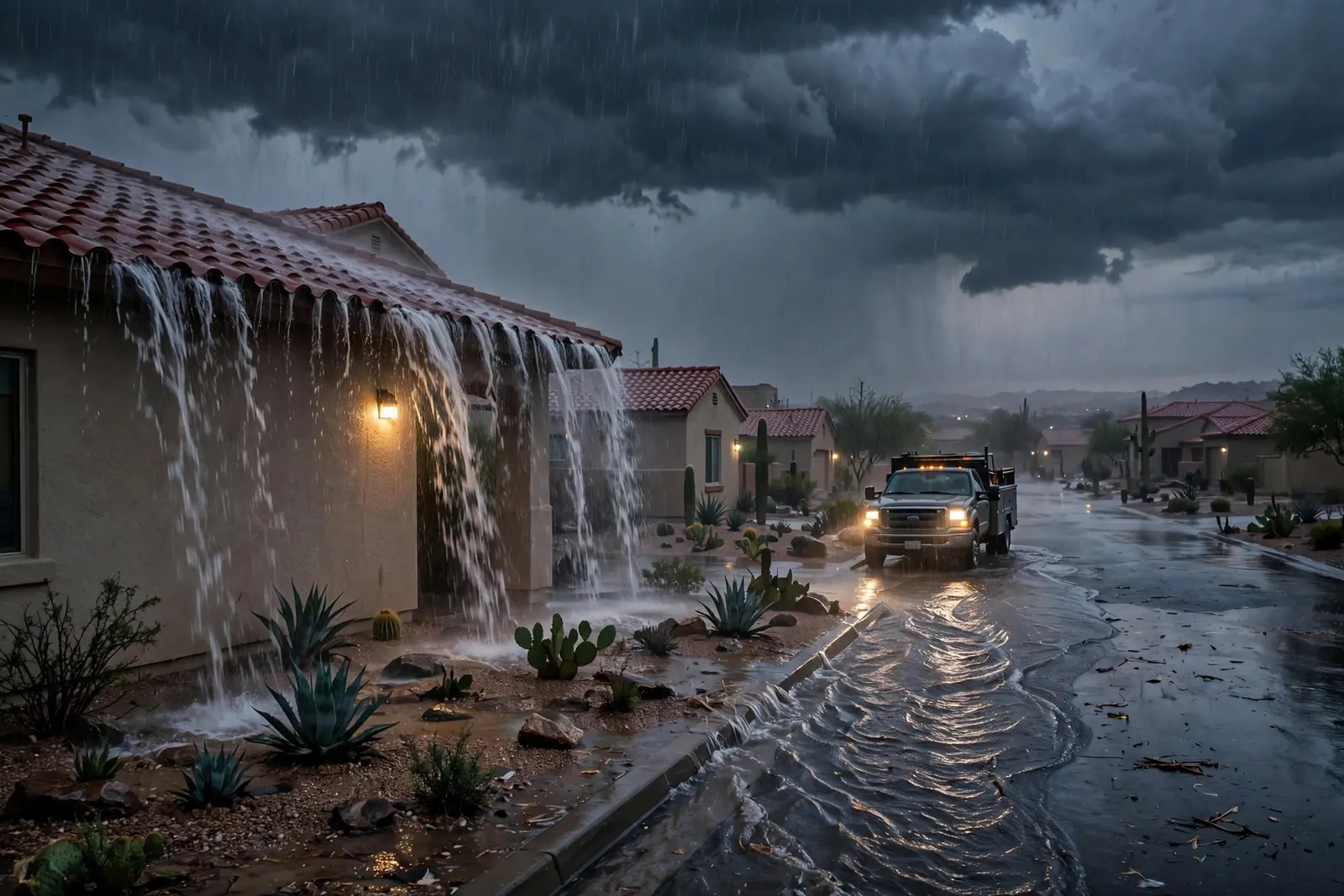 Storm Damage RestorationMonsoon roof leaks, wind-driven rain and flash flooding, plus the pre-season prep list that prevents most of it.
Request an Assessment in This Area
Tell us what happened and we will call you back to schedule the assessment. Prefer to talk? Call (480) 555-0100.
FIELD FORM · QC-01