Sewage Cleanup in the East Valley
Sewage cleanup is the job where water damage stops being a property problem and becomes a health problem. A backup brings Category 3 water into a home: the most contaminated class, carrying bacteria, viruses and whatever else the line holds. The rules are different from a clean-water leak. You do not mop it, you do not walk through it in shoes you wear into the kitchen, and you do not run a household fan over it. Sewage cleanup means extraction with the right protective equipment, removal of the porous materials that cannot be sanitized, disinfection of what remains, and drying verified by meter. San Tan Dry Co. does that work across Queen Creek, Gilbert, Chandler, Mesa and San Tan Valley.
Serving Mesa · Gilbert · Chandler · Queen Creek · San Tan Valley
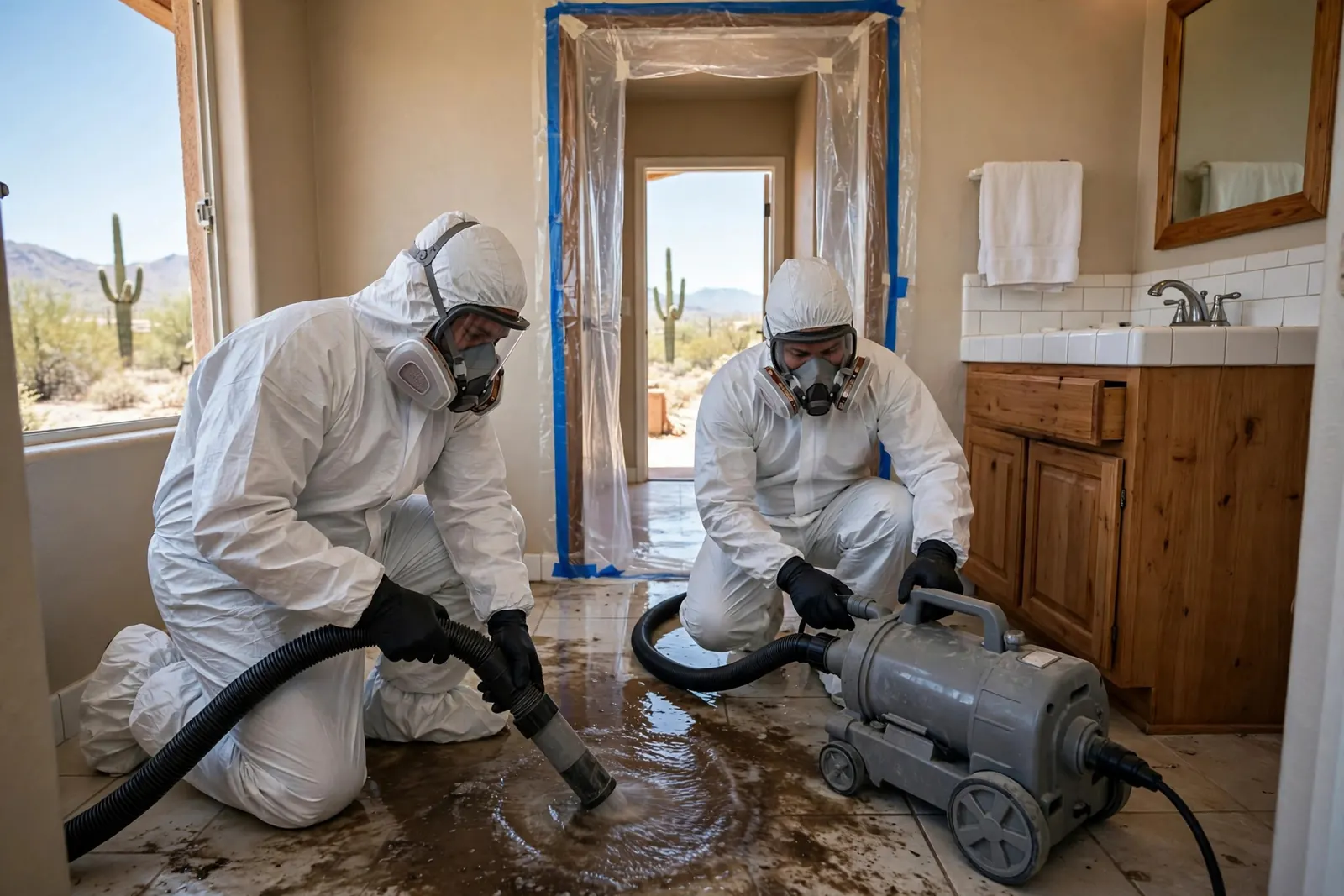
Why sewage is its own category
Restoration work sorts water into three categories. Category 1 is clean water from a supply line. Category 2 is gray water with some contamination, like a washing machine discharge. Category 3, sewage and toilet backups, flood water that has contacted ground and soil, is treated as a biohazard as a matter of professional standard, because the pathogen load is real and the exposure routes are ordinary ones: skin contact, hand to mouth, and aerosolized particles from fans, vacuums and foot traffic spreading contamination room to room. This is not alarmism; it is why the cleanup sequence for sewage is built around containment and sanitation rather than drying alone, and why a sewage event of any size is a call, not a DIY project. Keep children and pets entirely out of affected rooms until the area has been cleaned and cleared.
What causes sewage backups in East Valley homes
Main line blockages are the most common cause: grease, wipes that were marketed as flushable, and scale building up until the line will not pass flow, at which point the lowest fixtures in the house, usually a first-floor toilet, tub or shower drain, become the exit.
Tree roots are the older-neighborhood problem. In Mesa's postwar stock and older parts of Chandler, roots enter clay and cast iron lines at the joints and build a net that catches everything. The backup that "came out of nowhere" usually has roots in it.
Aging drain materials. Cast iron corrodes from the inside out over decades; Orangeburg and other mid-century materials deform. A line can drain slowly for a year, then fail completely during a high-use weekend: guests, laundry, showers, all at once.
Septic systems at the edges of our footprint, in the Queen Creek Ranchettes and parts of San Tan Valley, back up for their own reasons: full tanks, saturated drain fields during monsoon rain, and lines crushed by vehicle traffic over shallow runs.
Monsoon surcharging. Intense rain can overwhelm municipal lines and push water back through floor drains and low fixtures in low-lying homes. It arrives with the storm, which means sewage and storm damage land in the same visit.
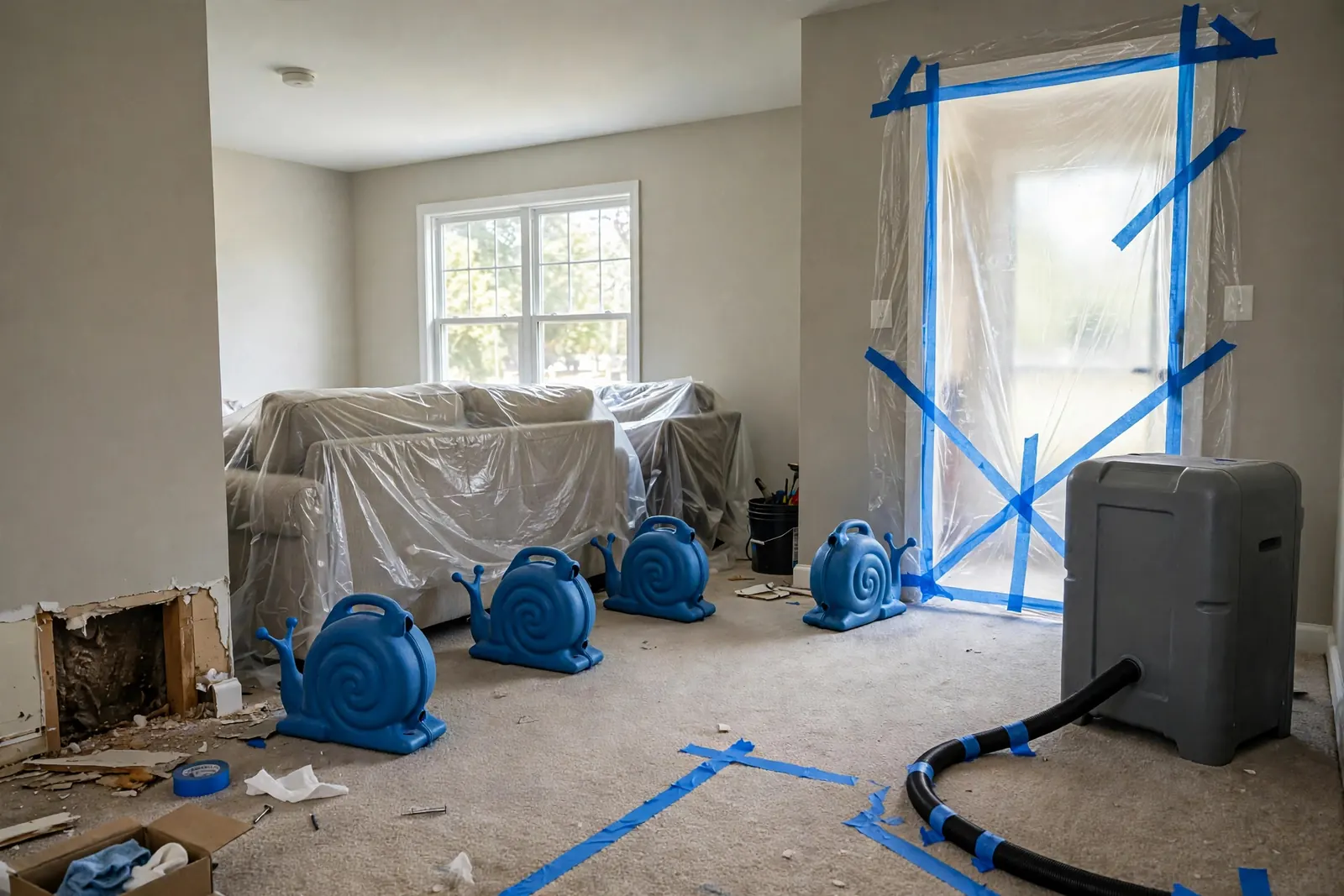
How our sewage cleanup runs, step by step
Step 1: Safety and containment. The affected area is closed off, protective equipment goes on, and anything that would spread contamination, household fans, foot traffic through the area, stops. HVAC registers in the affected zone are sealed so the system does not distribute aerosols.
Step 2: Extraction. Standing sewage and solids are extracted with equipment dedicated to contaminated water. Nothing from this step goes through your fixtures or your yard.
Step 3: Removal of unsalvageable porous materials. Carpet and pad in the affected area, wet drywall up to above the water line, insulation and any porous contents that cannot be fully sanitized come out and are bagged for disposal. This is the step homeowners most want to negotiate, and it is the one that is not negotiable: porous materials that have absorbed Category 3 water cannot be reliably disinfected, and leaving them is leaving the contamination.
Step 4: Cleaning and disinfection. Remaining surfaces, slab, framing, tile, fixtures, are cleaned and treated with an EPA-registered disinfectant appropriate to the contamination. Grout lines, wall bases and subfloor seams get specific attention because they are where residue hides.
Step 5: Drying and verification. The structure is dried like any water job, with moisture readings, because a sanitized but still-wet wall cavity is tomorrow's mold job. Only then does the rebuild list get written: drywall, baseboards, flooring, in the scope you approve.
What can be saved, and what cannot
Honesty here saves money and arguments with adjusters. Hard, non-porous surfaces, tile, sealed stone, fixtures, glass, metal, can be cleaned and disinfected reliably. Solid wood furniture is a case-by-case judgment depending on contact and finish. Carpet, pad, upholstered furniture, mattresses, stuffed toys, paper goods and drywall that took Category 3 water are not salvageable, and a company that offers to "treat" your soaked carpet pad is selling you the contamination back. Contents that matter get inventoried and photographed for your insurance claim either way, because documentation is what gets them paid for.
After the cleanup: the mold question
A sewage event is also a major water event, and everything the mold clock says about wet drywall applies doubled: the materials that stay, framing, subfloor, adjacent wall cavities, need to be dry and verified. Our mold remediation page covers how growth is handled when it has already started, which happens when a backup sat for a weekend while a home was empty. The sanitation sequence above, done promptly and followed by verified drying, is what keeps a sewage claim from becoming a sewage-plus-mold claim.
Frequently Asked Questions
Is it safe to stay in the house during a sewage cleanup?
The affected rooms are off limits until they are cleaned and cleared. The rest of the home is usually fine to occupy when containment is set and the HVAC in the affected zone is sealed, and we will tell you plainly if your situation is one of the exceptions, such as a backup affecting the only bathroom or a kitchen.
My backup was small, just one bathroom floor. Do I still need a crew?
If sewage touched only sealed tile and you caught it immediately, careful cleaning with a proper disinfectant can be reasonable, and we will say so on the phone rather than sell you a visit. If it reached carpet, drywall, a vanity cabinet or a wall base, the calculus changes, because what it soaked into cannot be disinfected in place. Describe what got wet when you call (480) 555-0100 and you will get a straight answer.
Who pays for sewage cleanup?
Standard homeowners policies often exclude sewer backup unless a specific backup endorsement was added. Coverage varies widely, which is why documentation matters either way. Our insurance claims guide explains the endorsement question in plain terms. We document the loss fully whether a claim is involved or not.
How long does sewage cleanup take?
Extraction, removal and sanitation for a typical single-area residential backup run one to two days; drying adds several days of monitored equipment like any water job. Multi-room events take longer. Your written scope will show the sequence before work begins.
Can you fix the plumbing problem too?
Our job is the cleanup, sanitation and restoration. The line itself, a root mass, a collapsed section, a full septic tank, belongs to a plumber or septic service, and the cleanup goes better when the two are sequenced: line cleared and verified, then sanitation, then drying. We will coordinate the order with whoever handles your line rather than clean a room the line is about to refill.
Related Services
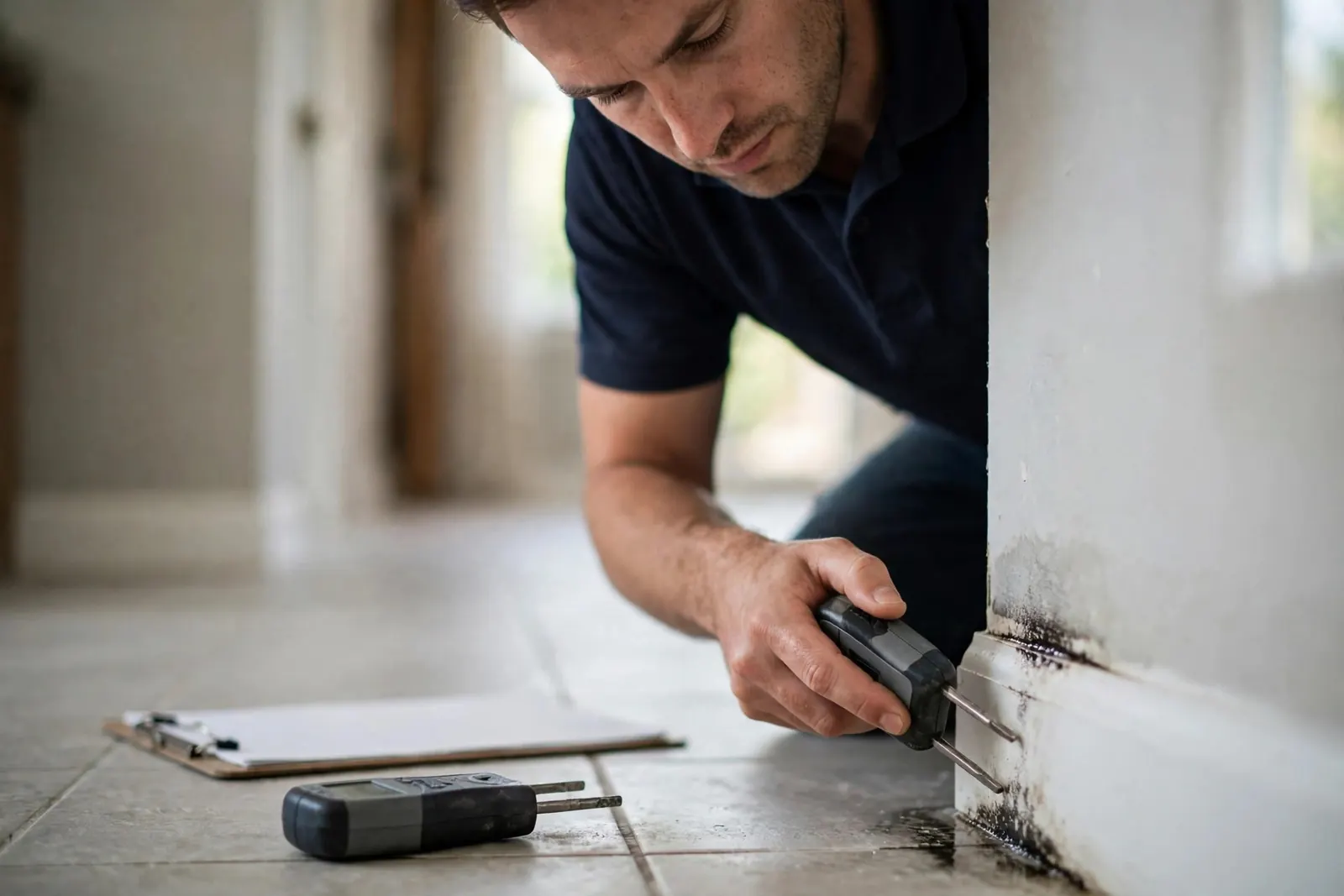 Mold RemediationContainment first, then removal and HEPA filtration, with the moisture source fixed so the growth has nothing to come back to.
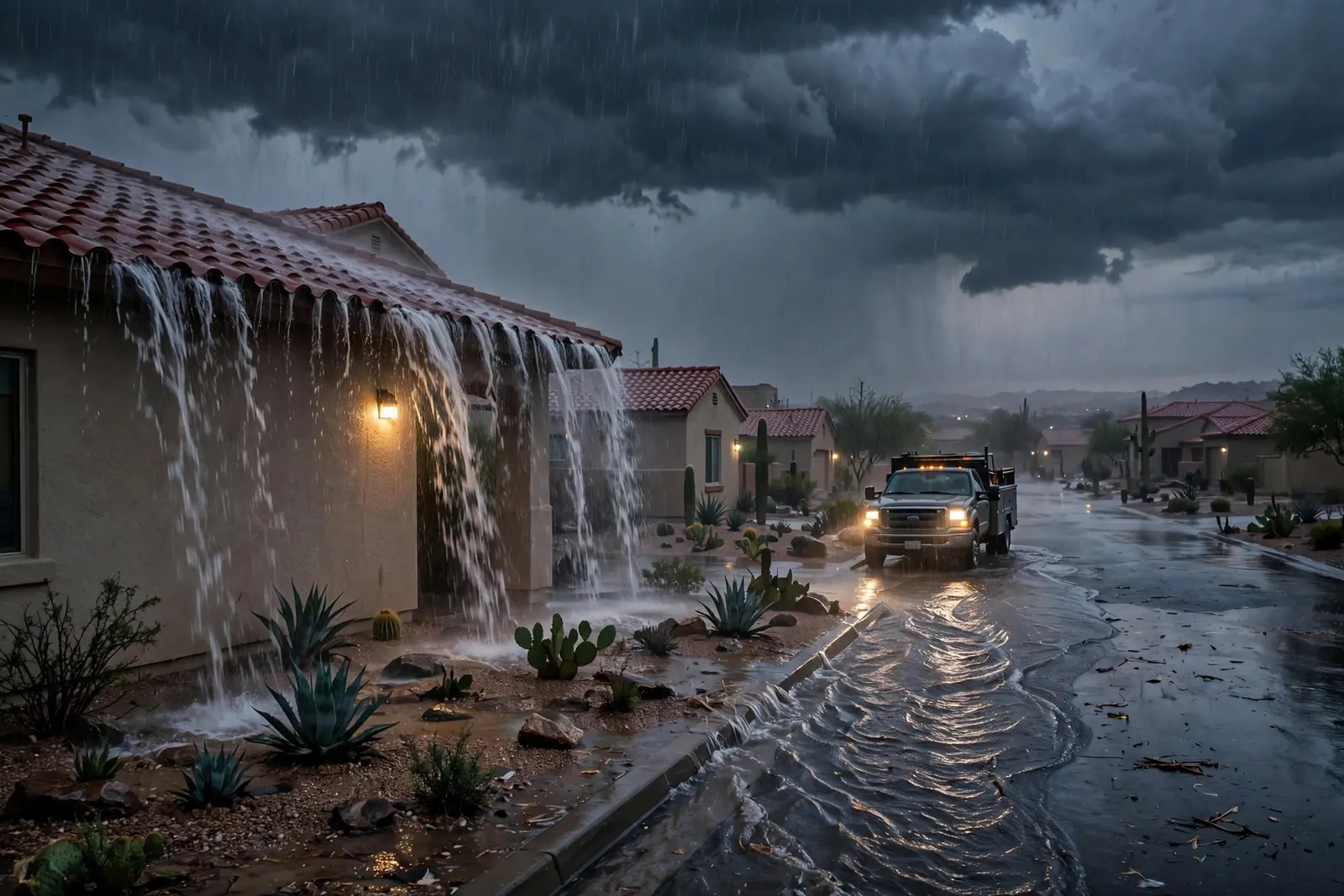 Storm Damage RestorationMonsoon roof leaks, wind-driven rain and flash flooding, plus the pre-season prep list that prevents most of it.
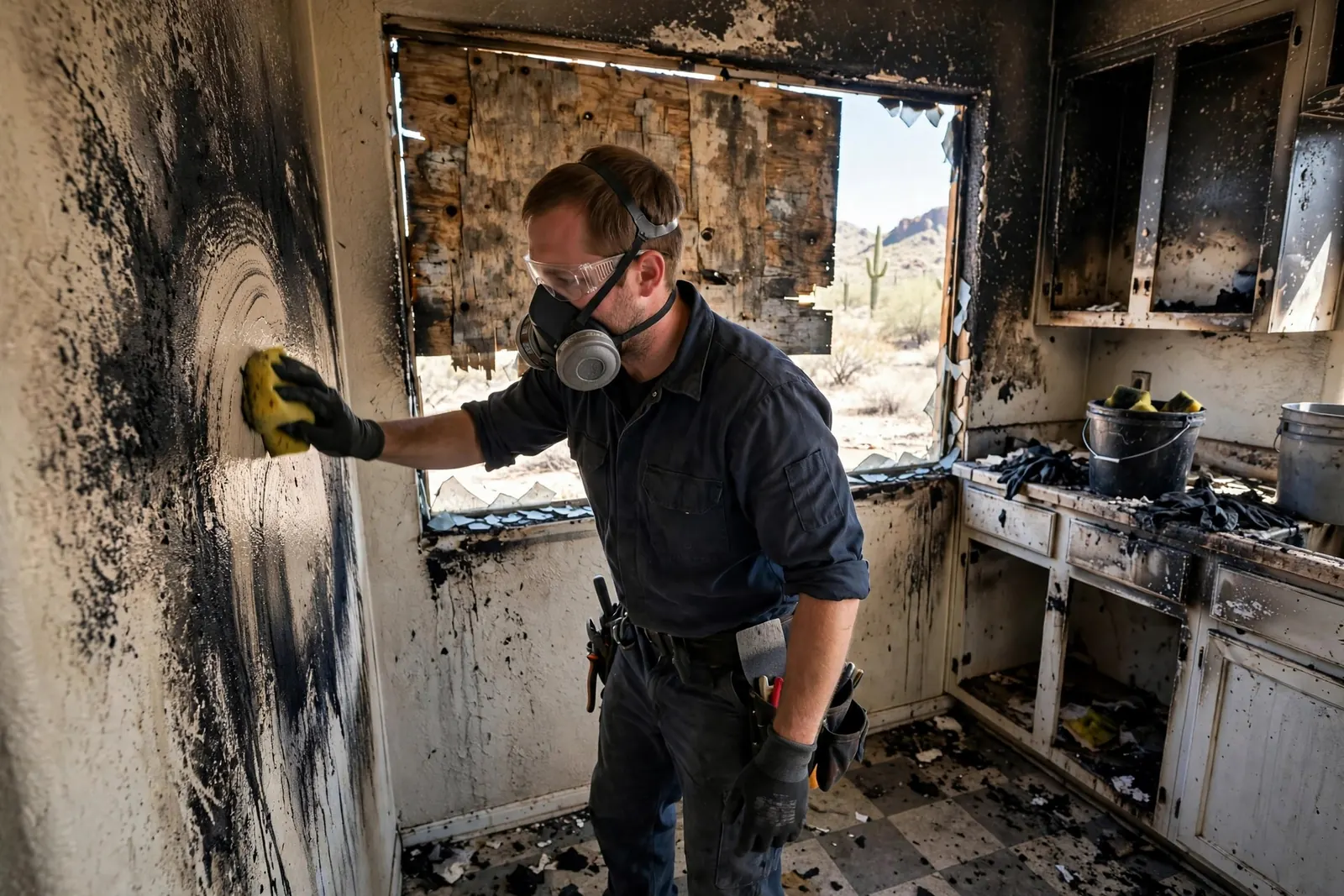 Fire Damage RestorationBoard-up, soot and smoke cleanup, odor work, and drying out the water the fire department left behind.
Request a Sewage Cleanup Assessment
Tell us what happened and we will call you back to schedule the assessment. Prefer to talk? Call (480) 555-0100.
FIELD FORM · QC-01