How Water Damage Insurance Claims Work in Arizona
After a water loss in an East Valley home, the practical question arrives within the hour: how does an insurance claim actually work for this? This page walks through the Arizona process in plain language: what insurers cover, what they exclude, and where claims are won and lost. We are restoration contractors, not lawyers, public adjusters or agents, so nothing here is legal or policy advice. It is the sequence we watch play out in Queen Creek, Gilbert, Chandler and Mesa after every major loss, and the documentation discipline that decides most of it.
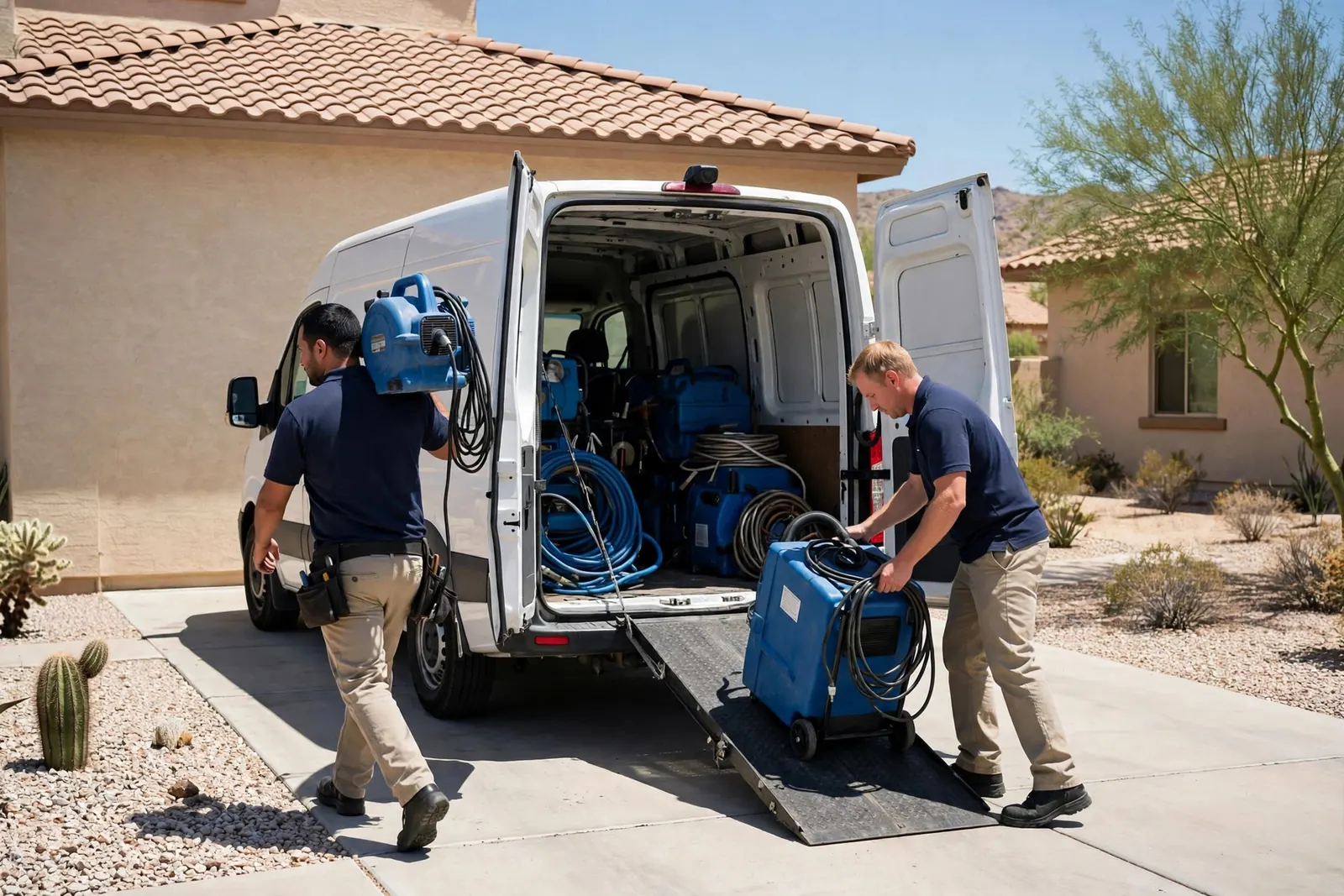
Our part in the process is narrow and honest: we assess, we document damage with moisture readings and photographs, we produce a written scope, and we meet adjusters at the property to walk the findings. We do not promise claim outcomes, because the decision belongs to your insurer, and any contractor who guarantees an approval is telling you something no contractor can know.
The line that decides most water claims: sudden versus gradual
Arizona homeowners policies generally cover water damage that is sudden and accidental: a supply line bursts, a water heater fails, an appliance hose lets go, a storm opens a roof and rain enters. They generally exclude damage that is gradual: the leak that wept for six months, the drain that seeped until the wall rotted, the maintenance problem that became a damage problem slowly. Insurers call it wear, tear and deterioration, and it is the single most common reason East Valley water claims disappoint their owners.
This is why the timeline in your documentation matters so much. A slab leak found the week the water bill jumped is a different claim from the same leak found after a season of flooring damage. It is also why "we will wait and see" is expensive advice after any leak: every week of delay moves a loss toward the gradual side of the line.
Step 1: Stop the damage, then document before anything changes
Policies expect you to mitigate: stopping the water and preventing further damage is your duty, not a favor to the insurer. Shut off the source, protect contents, and let extraction and drying start before an adjuster visit that may be days away after a regional monsoon. Document as you go: photographs and video of the source, the affected rooms and the water itself, before materials are removed. Our process produces this record as a matter of course: moisture readings with dates, photographs at every stage, and the written scope, which is the same file whether or not a claim exists.
Step 2: File the claim and read the adjuster's visit correctly
Filing opens the claim; the adjuster's inspection is where its value is largely set. Walk the adjuster through everything, including the rooms where damage is suspected but not visible, and provide the moisture documentation. Adjusters work from evidence. A wall that metered wet on a dated reading is a covered conversation; a wall someone remembers being wet is a negotiation you will probably lose. If our crew did the assessment, we will meet the adjuster at the property and walk the readings room by room.
Step 3: Understand the money words: deductible, ACV, RCV, limits and endorsements
Your deductible comes off the top of any payment, and on larger Arizona policies it may be a percentage of the home's insured value for certain perils, so read the declarations page before assuming a flat figure. ACV (actual cash value) pays the depreciated value of damaged materials now; RCV (replacement cost value) releases the depreciation holdback after the work is completed and documented, which is why finishing the paperwork at the end of a job is worth real money. Two endorsements deserve specific attention in the East Valley: water backup coverage, which is what pays for sewer and drain backups and is often an add-on with its own limit, not part of the base policy; and mold limits, since many policies cap mold remediation at a set amount even when the underlying water event was covered. Knowing both numbers before a loss is a five-minute read of your policy that is worth more than any advice after one.
What insurers commonly pay for, and what they commonly do not
Commonly covered, when the event qualifies: extraction and drying, demolition required to dry, repair of damaged finishes, mold remediation up to its limit when it follows a covered event, and contents documented as destroyed. Commonly denied or disputed: the plumbing repair itself (fixing the pipe is usually the homeowner's cost even when the damage it caused is covered), long-running leaks, flood water from outside the home (which belongs to flood insurance, a separate policy), and undocumented contents. None of this is a promise about your policy; it is the pattern, and your policy text governs.
Fire claims, briefly
Fire is a standard covered peril, and fire claims usually start faster and dispute less than water claims. The two places homeowners lose money are undocumented contents, which is why inventory and photographs of damaged belongings matter from day one, and delayed securing of the property, where a second loss (weather through a broken roof section, theft through an unsecured opening) lands while the claim is young. Our fire damage restoration page covers the securing and documentation sequence.
Frequently Asked Questions
Should I file a claim for a small water loss?
Compare the likely covered amount against your deductible and your claim history. A loss modestly above the deductible may not be worth a claim on your record; a loss several times the deductible usually is. We will give you the assessed scope and range either way, and the decision stays yours. Be skeptical of any contractor who pushes you to file before an assessment exists.
My claim was denied as a gradual leak. Is that final?
Denials can be revisited with better documentation, and policies have dispute processes your agent or an attorney can explain. What we can contribute is the technical record: when moisture was found, where, and what the readings showed. We cannot relitigate your policy, and we will not pretend otherwise.
Does using your company affect my claim?
Your insurer may suggest preferred vendors; Arizona homeowners generally may choose their own contractor. What affects the claim is the documentation and the scope's defensibility, which is why we build both from metered evidence rather than from the size of the loss.
Should I call my insurer first, or a restoration company first?
Stop the water first; that order is not negotiable, because every hour of spread is damage no claim conversation can undo. After that, either order works, but practically: get the assessment scheduled, then file with the assessed facts in hand. You will describe the loss better, and the documentation clock, which runs from the first readings, starts either way. What we advise against is filing and then waiting days for permission to mitigate; policies expect mitigation, and waiting converts a covered sudden loss into a bigger, arguable one.
Who pays you, me or the insurer?
Practices vary; commonly the homeowner contracts the work and the insurer reimburses under the claim, with RCV holdbacks released on completion documentation. Every arrangement on a job with us is written into the scope paperwork before work begins, so there are no surprises about who owes what, when.
Get the Documentation Right From Hour One
Tell us what happened and we will call you back to schedule the assessment. Prefer to talk? Call (480) 555-0100.
FIELD FORM · QC-01