Fire Damage Restoration in Mesa, AZ
Fire damage restoration in Mesa, AZ is never only about what burned. The flame damage is usually the smallest part of the loss. Soot travels through rooms the fire never touched, smoke odor settles into soft goods and HVAC ducting, and the water that put the fire out soaks floors, walls and everything below the fire floor. Restoration after a fire means handling all four problems in the right order, starting with securing the building so the damage stops growing. That is the work San Tan Dry Co. does across Mesa, Gilbert, Chandler and Queen Creek.
Serving Mesa · Gilbert · Chandler · Queen Creek · San Tan Valley
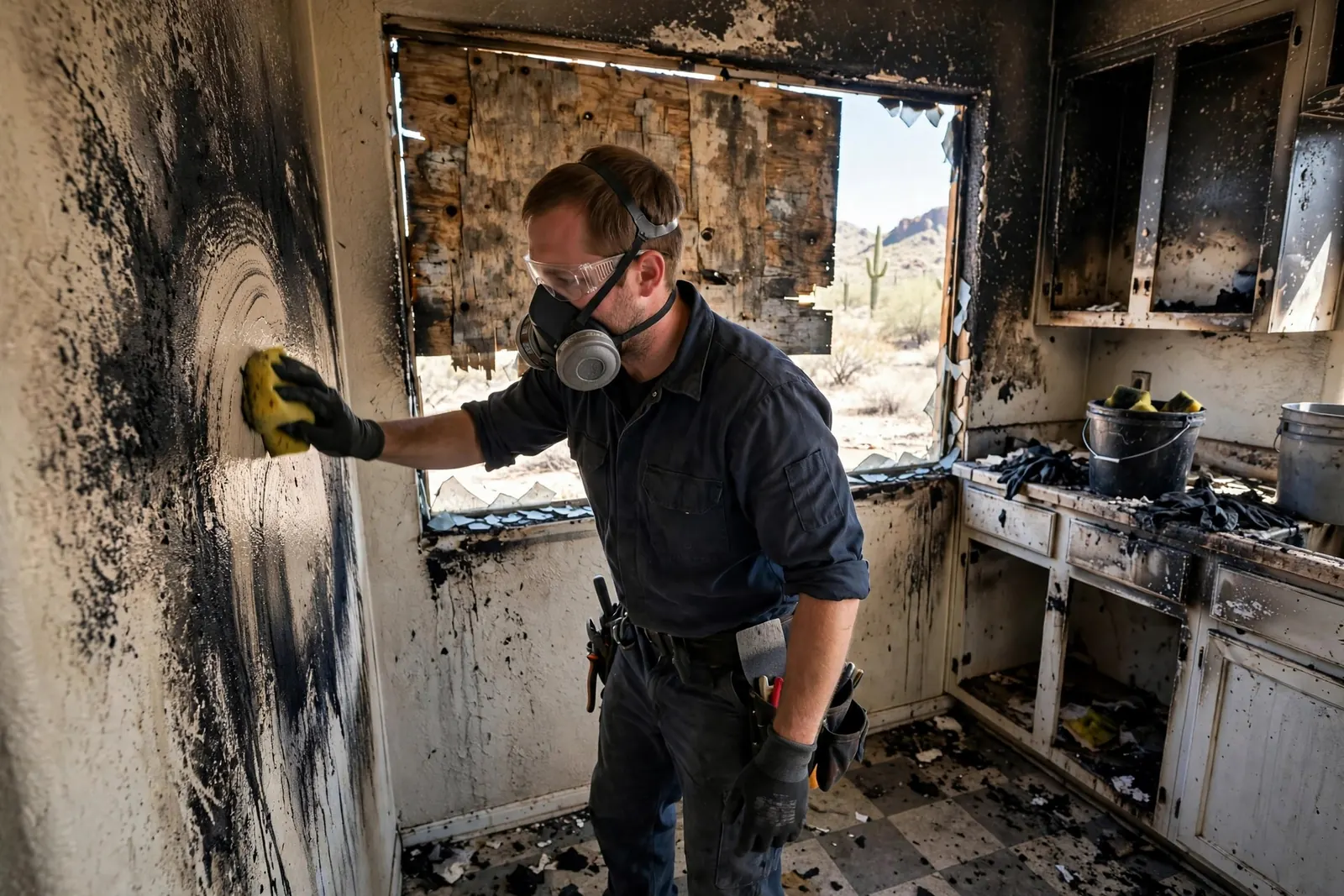
In short: after a fire, the sequence is secure the property (board-up and tarping), remove standing suppression water and dry the structure, clean soot with methods matched to the surface, neutralize smoke odor at its source, and document everything for the insurer. Call (480) 555-0100 when the fire department has released the property and you need the next step handled.
What fire damage actually includes
Flames are chapter one of four.
Soot. Fire produces different soot depending on what burned. Kitchen and protein fires leave a nearly invisible, greasy film that smells strongly and resists casual cleaning. Wood fires leave dry soot that smears if wiped wrong. Synthetic materials, plastics, carpet, upholstery, produce a sticky soot that embeds in surfaces. Using the wrong cleaning method on the wrong soot does not just fail; it sets the residue permanently. Sorting soot types room by room is the first professional judgment on a fire job.
Smoke and odor. Smoke particles penetrate porous materials: drywall, insulation, soft furnishings, clothing, ducting. Odor that is only masked comes back on the first hot day, and East Valley homes get hot days in quantity. Real odor removal cleans the source, seals where sealing is appropriate, and treats the air and duct system, in that order.
Water. A single room fire can put hundreds of gallons into a structure between hoses and sprinklers. That water follows the same rules as any other water damage: extraction, drying, and a mold clock that starts immediately. Fire jobs that skip the drying step trade a smoke problem for a mold problem in about a week.
Structure and security. Burned framing, compromised roof sections, broken windows and doors leave a home open to weather and to people. Securing the property is not an upsell; in monsoon season, an unsecured roof opening can double the loss in one storm.
First steps after a fire
Wait for the fire department to release the property, and do not re-enter until they clear it: structural and air hazards are real. Do not turn HVAC systems on, since moving air distributes soot. Do not start wiping soot yourself; dry soot smears and protein soot sets, and the first cleaning pass should be the right one. Photograph everything before anything moves, if you can do it safely from doorways. Then call us, and call your insurer. The documentation race starts immediately, and our insurance claims guide explains how fire claims proceed and what adjusters look for first.
How our fire restoration runs
Step 1: Secure the property. Board-up of openings, tarping of roof damage, and temporary securing of doors and windows. In Mesa, where a July afternoon can turn into a microburst by evening, this step is weather protection as much as security; our storm damage restoration page covers the monsoon side of that exposure, including the fires that monsoon lightning occasionally starts.
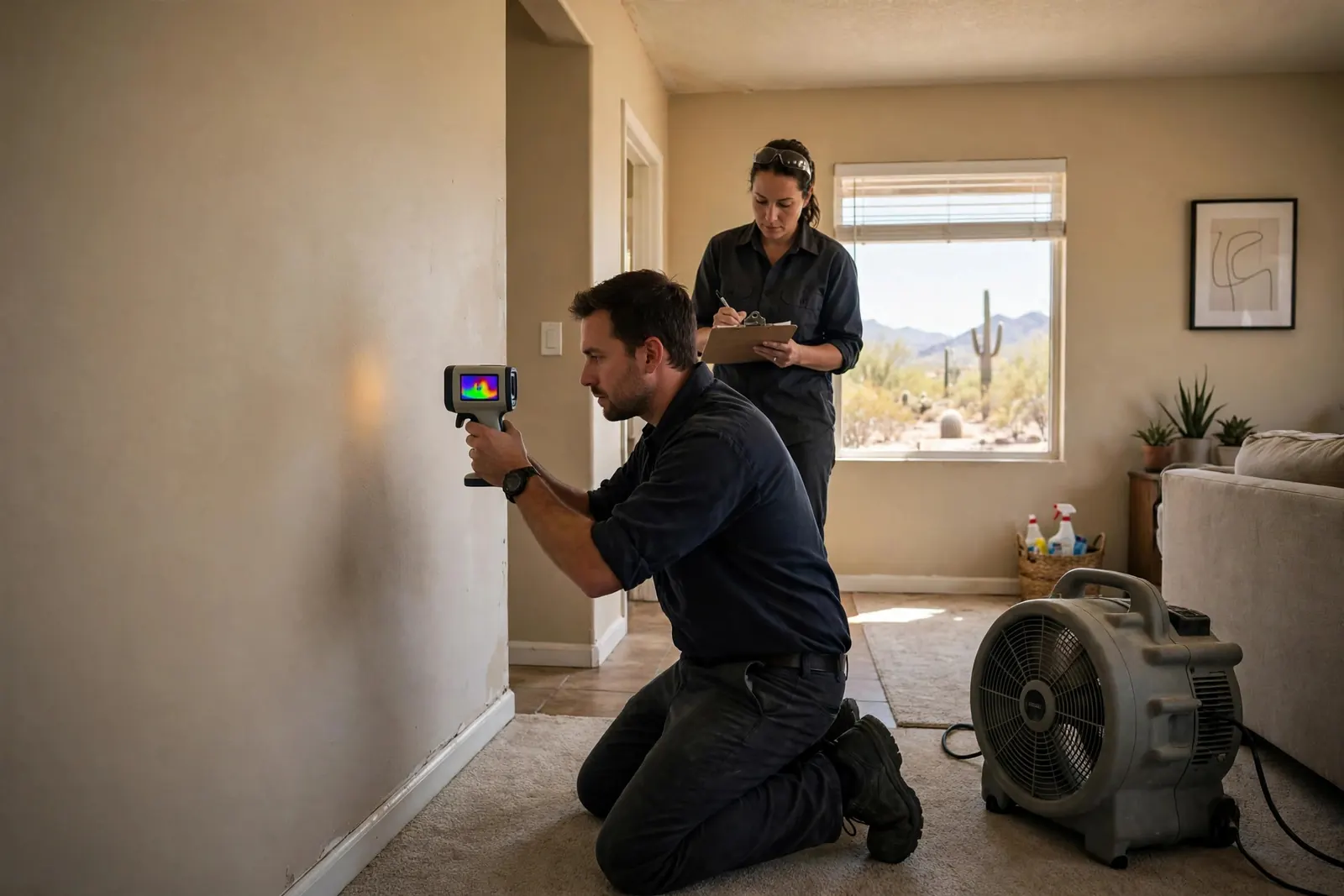
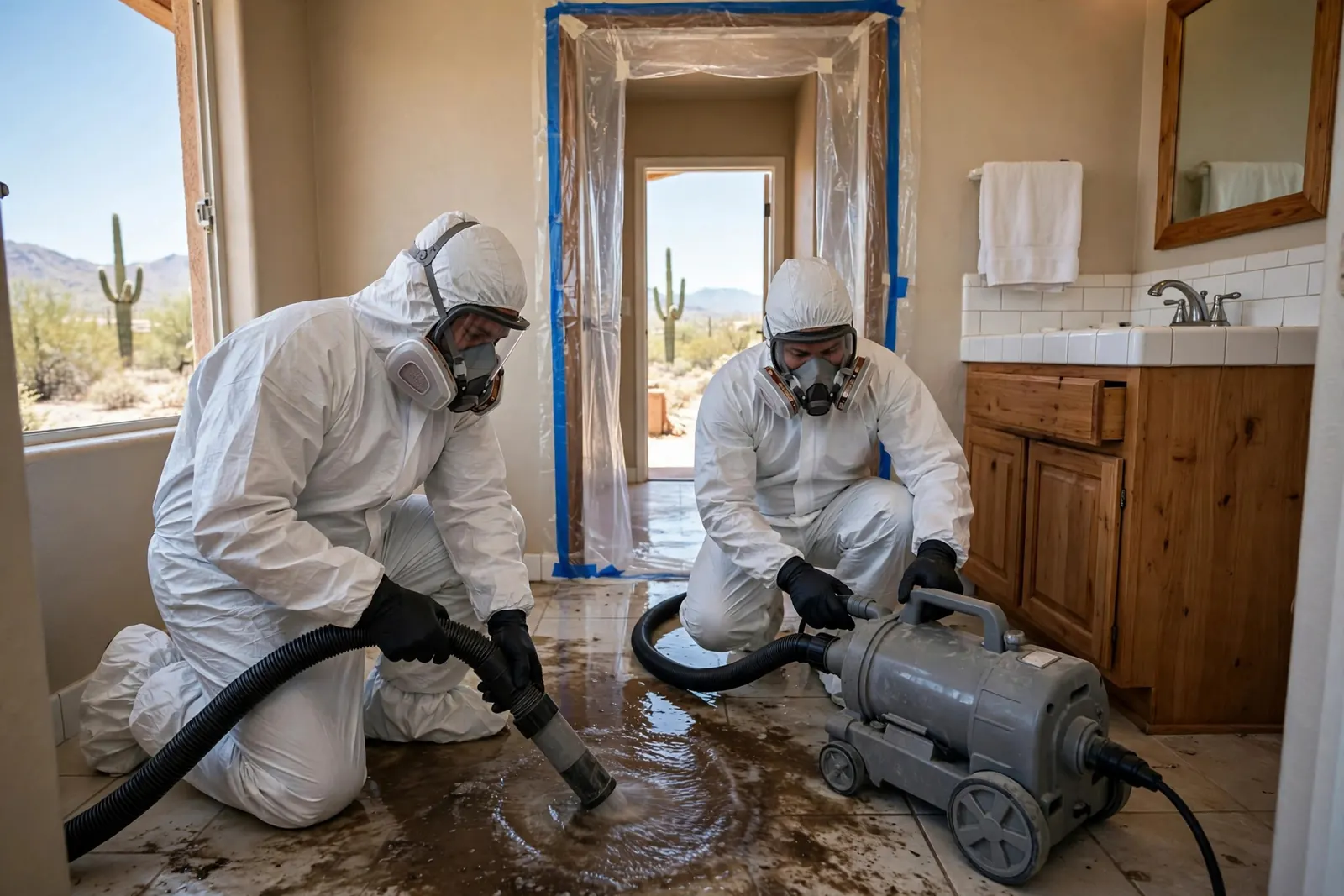
Step 2: Water extraction and drying. Suppression water comes out, wet materials are assessed, and drying equipment goes in with moisture readings documented. This runs in parallel with soot work, not after it.
Step 3: Soot and smoke cleaning. Room by room, surface by surface, with dry or wet methods matched to the soot type: HEPA vacuuming, chemical sponges for dry soot, degreasing methods for protein films, and demolition only where residue has destroyed the material itself.
Step 4: Odor removal. Source cleaning first, then sealing of surfaces that hold odor, then air treatment and duct cleaning where smoke traveled through the system. Odor work done before cleaning is wasted money; the order is the expertise.
Step 5: Contents and the rebuild list. What can be cleaned is cleaned and documented; what cannot is inventoried for your claim. You get the rebuild list in writing: the framing, drywall, paint and finish work that returns the home, scoped from the damage record rather than a walk-through guess.
Fire damage restoration in Gilbert, AZ
Gilbert's fire profile follows its kitchens and garages. Cooking fires are the most common residential fire everywhere, and Gilbert's open-plan kitchens put them one room away from the whole main floor, so soot distribution is wide even when flame damage is one appliance. Garage fires are the second pattern: water heaters, EV and golf cart charging, stored paint and fuel, in neighborhoods from Agritopia to Morrison Ranch where the garage is also the workshop and the storage unit. The restoration sequence in Gilbert runs the same as our Mesa process above; what changes is the soot map, because open plans and two-story volumes move smoke differently than the single-story ranch stock common in older Mesa. Our Gilbert page covers the water side of Gilbert losses.
Fire damage restoration in Queen Creek, AZ
Queen Creek fires skew toward the new-build pattern: kitchen fires in open plans, garage incidents, and outdoor fires that reach a structure: patio, grill and fire-pit accidents in the Ranchettes' larger lots, and the occasional lightning strike during monsoon season. The town's newer construction helps in one way, modern materials and code-built separations often limit flame spread, and hurts in another, because synthetic furnishings in new homes produce heavy, sticky soot loads. For Queen Creek homeowners the practical priorities are securing the property fast (monsoon weather does not wait for adjusters) and getting the soot assessment done before well-meaning cleanup sets the residue. Homeowners here can call (480) 555-0100 as soon as the property is released.
When fire and water arrive together
Most fire losses are also water losses, and some water events come with fire risk attached, which is why combined damage gets its own treatment on our Chandler page, where the fire-plus-water pattern shows up in older stock. The governing rule wherever it happens: drying and soot work are planned together, because the order of operations decides whether both problems get solved or each one makes the other worse. Wet soot is harder to remove than dry soot, and drying a room before its soot is stabilized can bake residue into surfaces. One crew sequencing both is not a convenience; it is the difference between one restoration and two.
Frequently Asked Questions
How soon should restoration start after a fire?
As soon as the property is released and secured. Soot is acidic and keeps damaging surfaces, especially metals, stone and finishes, for days after the fire; smoke odor sets deeper with time; and suppression water starts the mold clock. Board-up and the first assessment should happen immediately. The cleaning sequence then proceeds at the pace the soot types allow.
Can smoke odor really be removed, or just covered?
Removed, when the order is right: clean the source surfaces, seal the ones that hold odor in their pores, treat air and ducting last. Odor that returns on a hot day was masked, not removed, which is why we will not quote odor work as a standalone spray treatment.
What happens to my belongings?
Contents are triaged: cleanable items are cleaned and documented, destroyed items are inventoried with photos for your claim. Porous items that absorbed heavy soot, upholstered furniture near the fire, mattresses, are often not economically cleanable, and we will tell you that plainly rather than bill cleaning that cannot succeed.
Will insurance cover fire damage restoration?
Fire is a standard covered peril in Arizona homeowners policies, and most fire losses are claims. The adjuster will want documentation of everything, which is a core part of our process. We do not promise outcomes; the insurance guide explains the sequence and where homeowners commonly lose money, which is usually undocumented contents and delayed securing of the property.
Do you rebuild, or only clean?
We restore: secure, dry, clean, deodorize, and repair the damage our scope covers, scoped in writing from the damage record. For major structural reconstruction beyond restoration scope, we will say so at the assessment and help you understand what the rebuild phase needs, rather than discover it mid-job.
Related Services
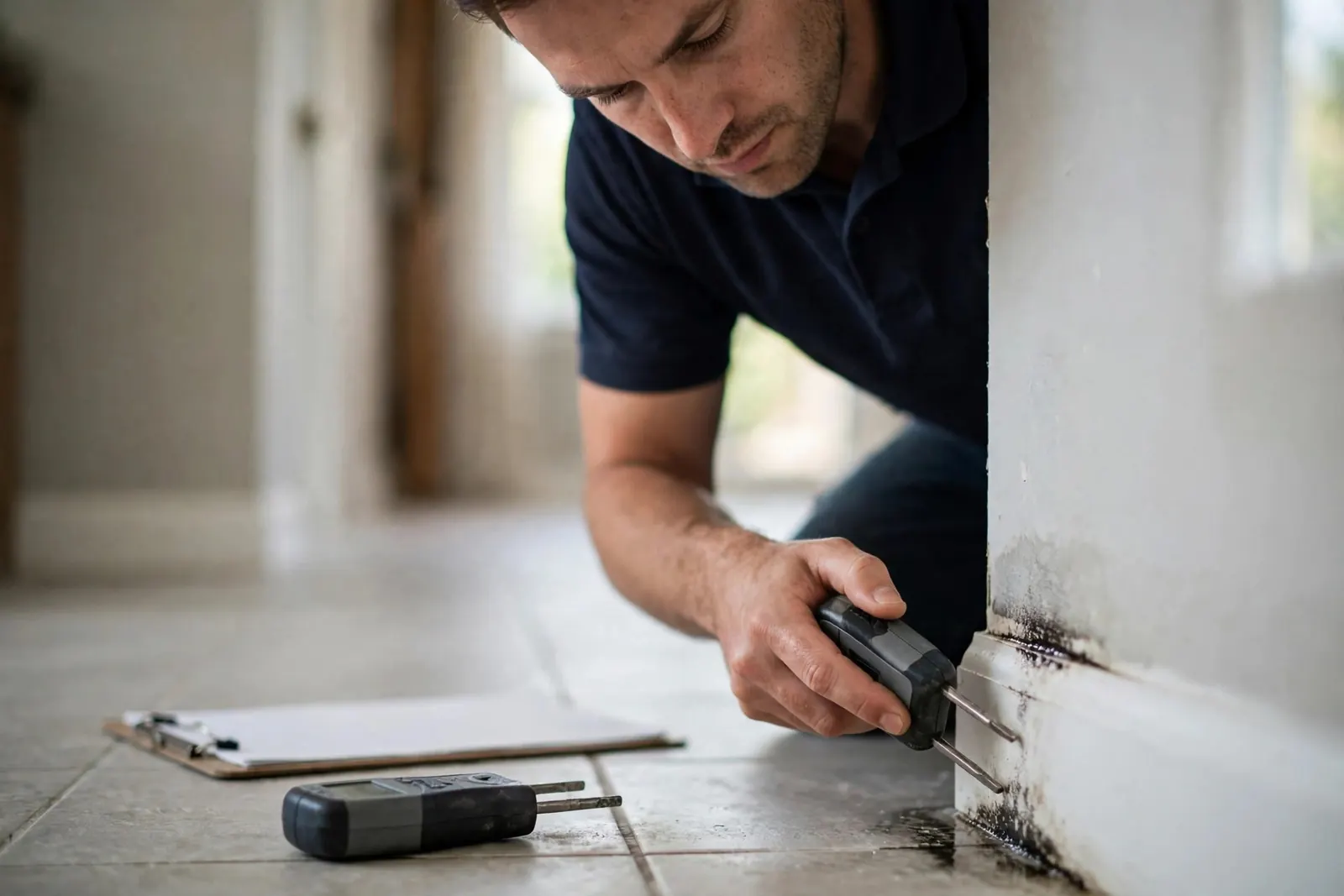 Mold RemediationContainment first, then removal and HEPA filtration, with the moisture source fixed so the growth has nothing to come back to.
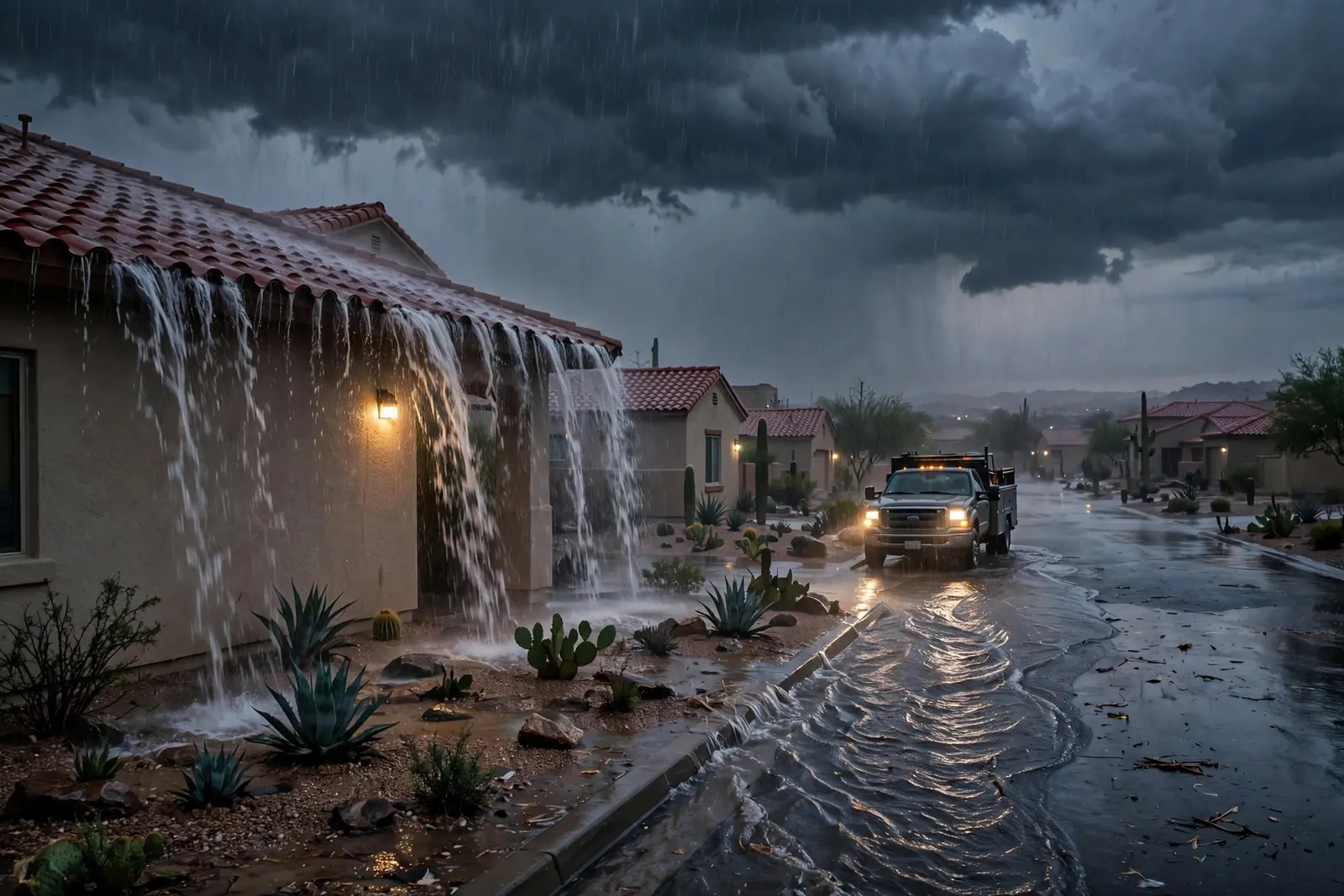 Storm Damage RestorationMonsoon roof leaks, wind-driven rain and flash flooding, plus the pre-season prep list that prevents most of it.
 Sewage CleanupCategory 3 water handled as a health protocol: containment, removal of what cannot be sanitized, disinfection, verified drying.
Request a Fire Damage Restoration Assessment
Tell us what happened and we will call you back to schedule the assessment. Prefer to talk? Call (480) 555-0100.
FIELD FORM · QC-01